Approached in 2016 our client’s brief was for ‘a small, but different holiday-home’ enhancing the family’s decades long connection with the site. A place that would be practical for aging, peaceful, bushfire-ready, sustainable, sitting in nature rather than on it with ‘beautiful, sensuous curves’.
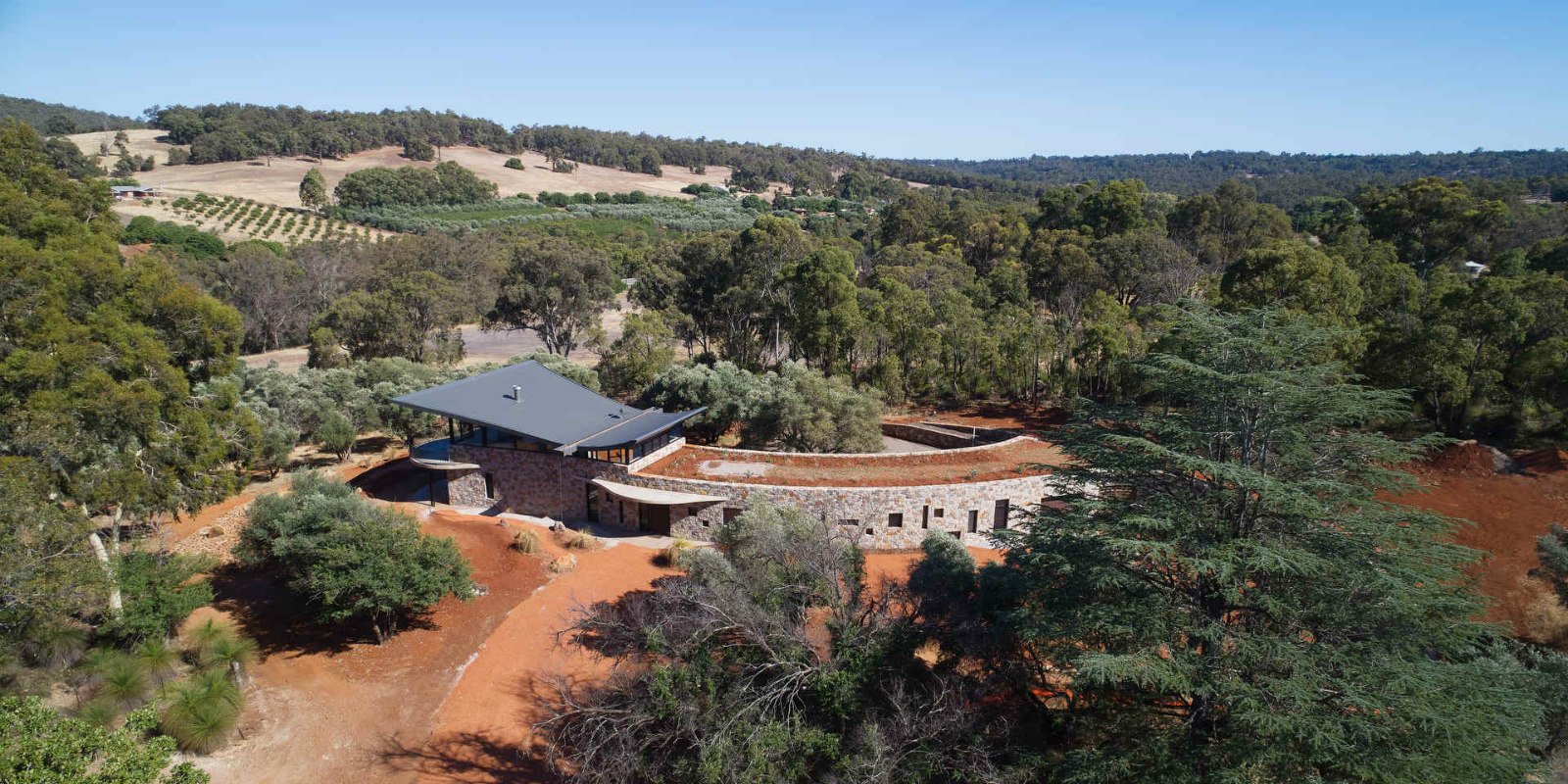
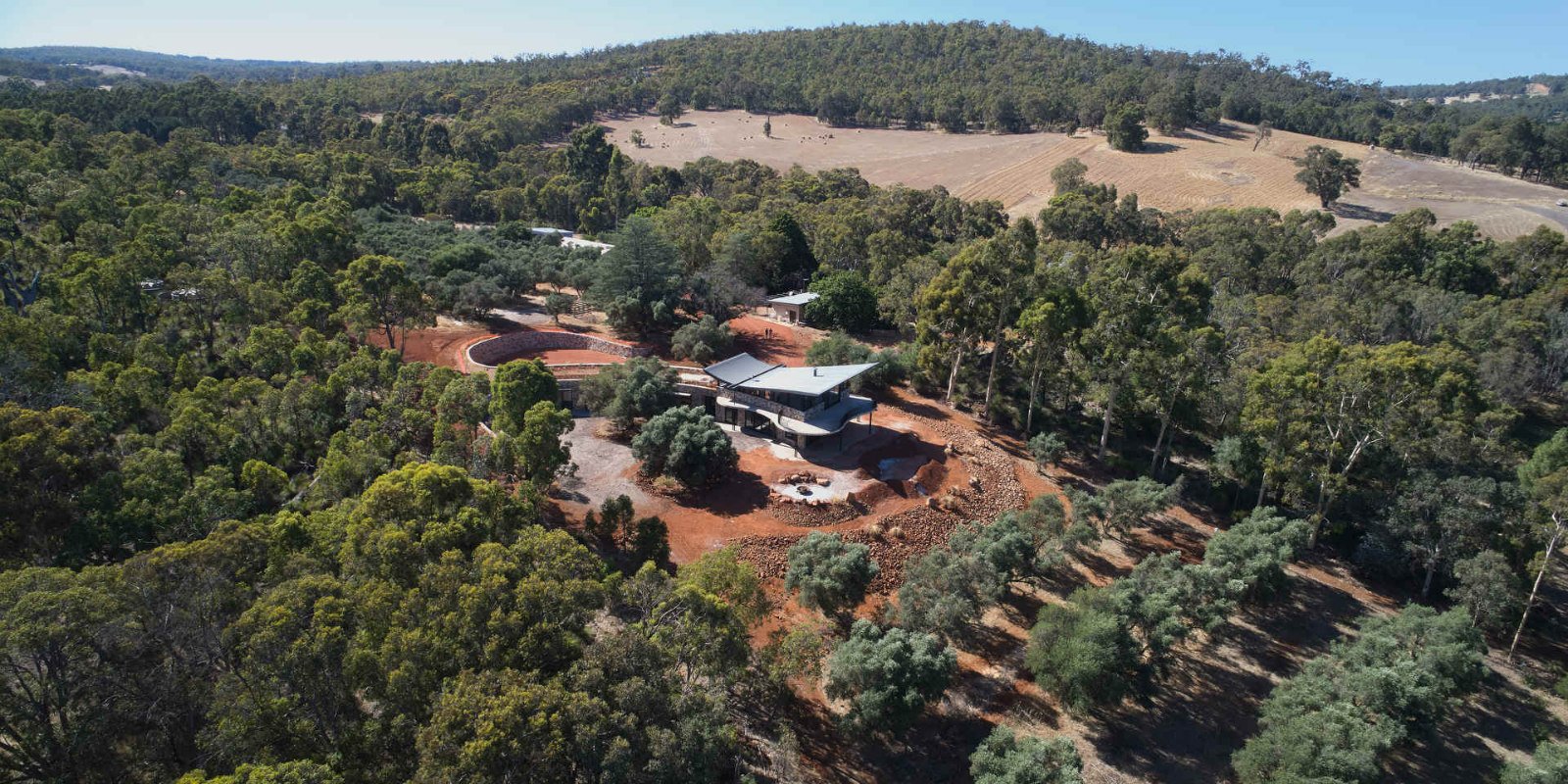
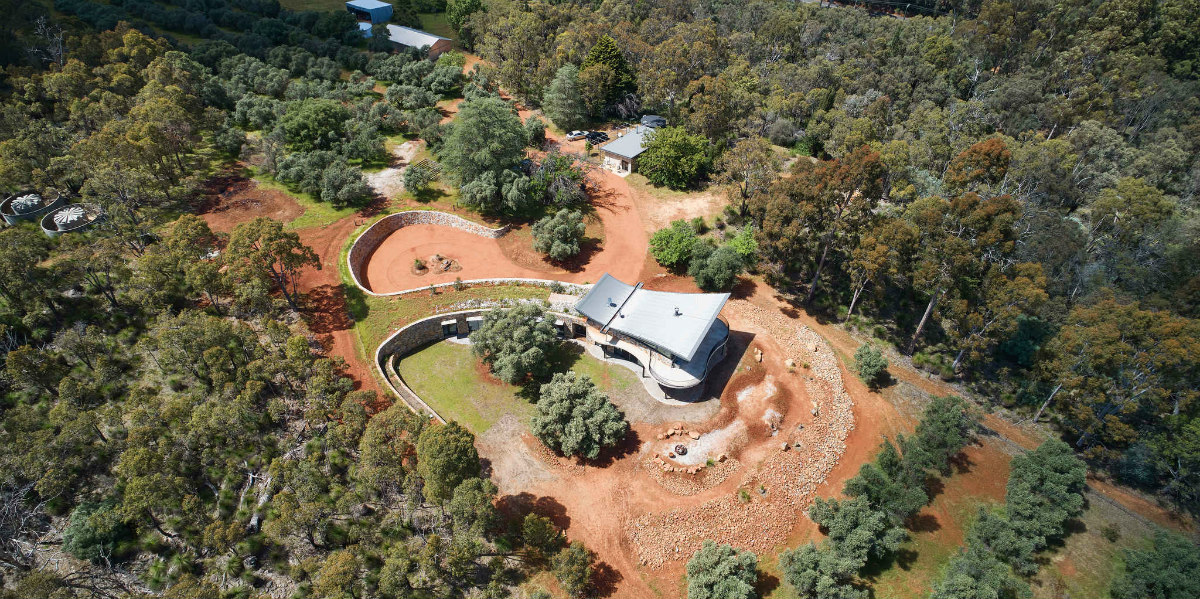
A BAL-FZ fire rating site location, vehicular access and materiality were key design drivers to achieve BAL-29. To comply with the Bushfire Management Plan, we located Stone-House within an existing olive-grove reducing its impact on old-growth bush/trees and near the original stone cottage built by our client’s father-in-law 50yrs ago.
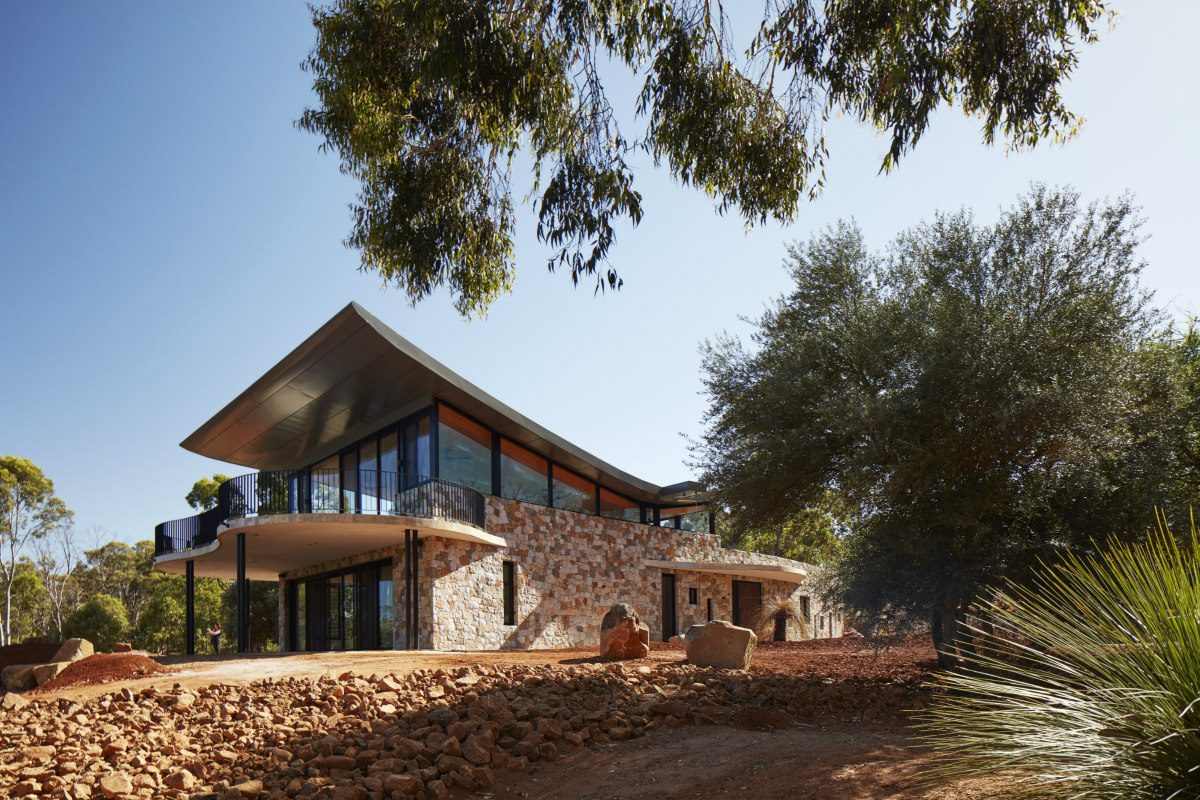
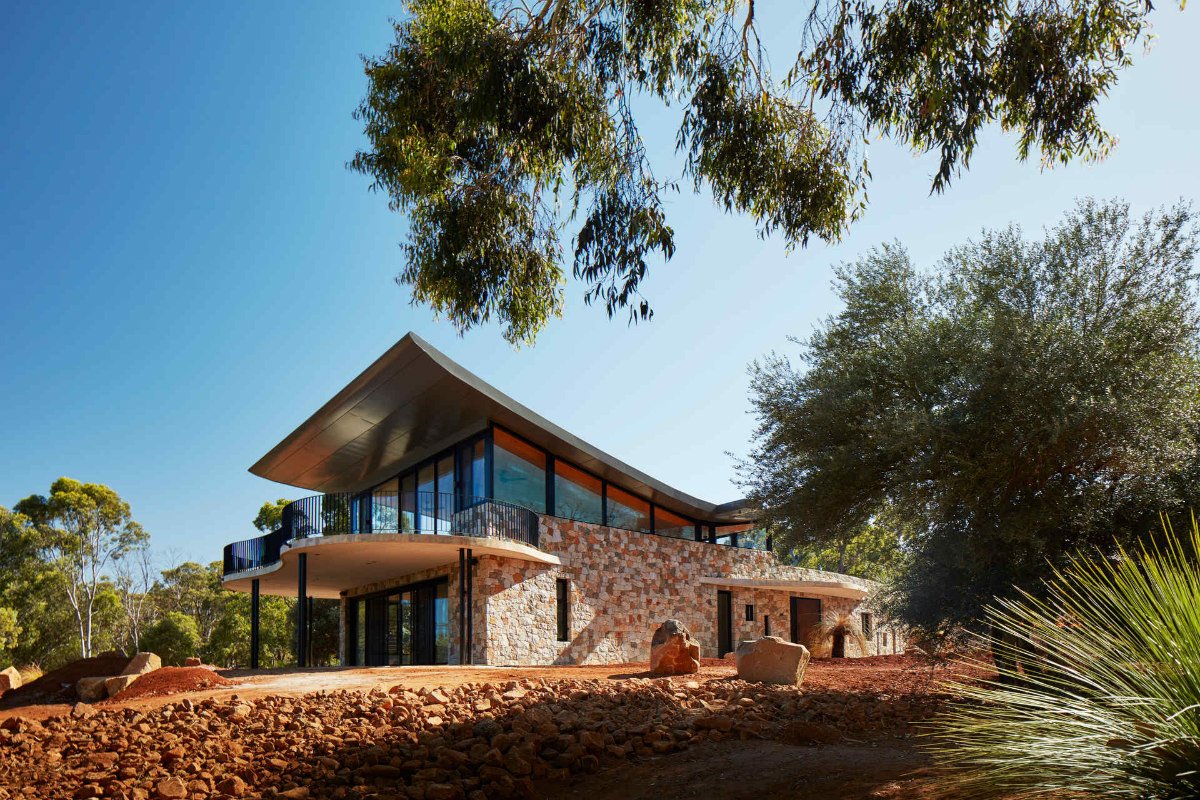
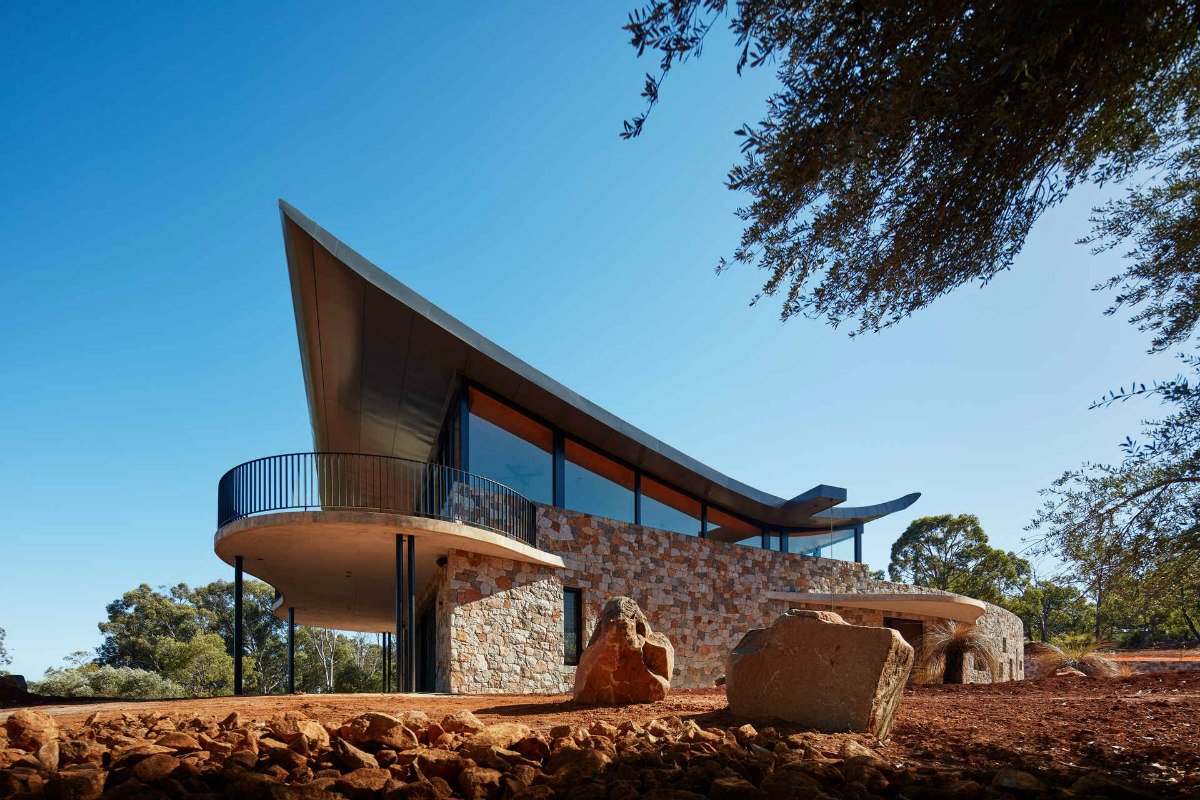
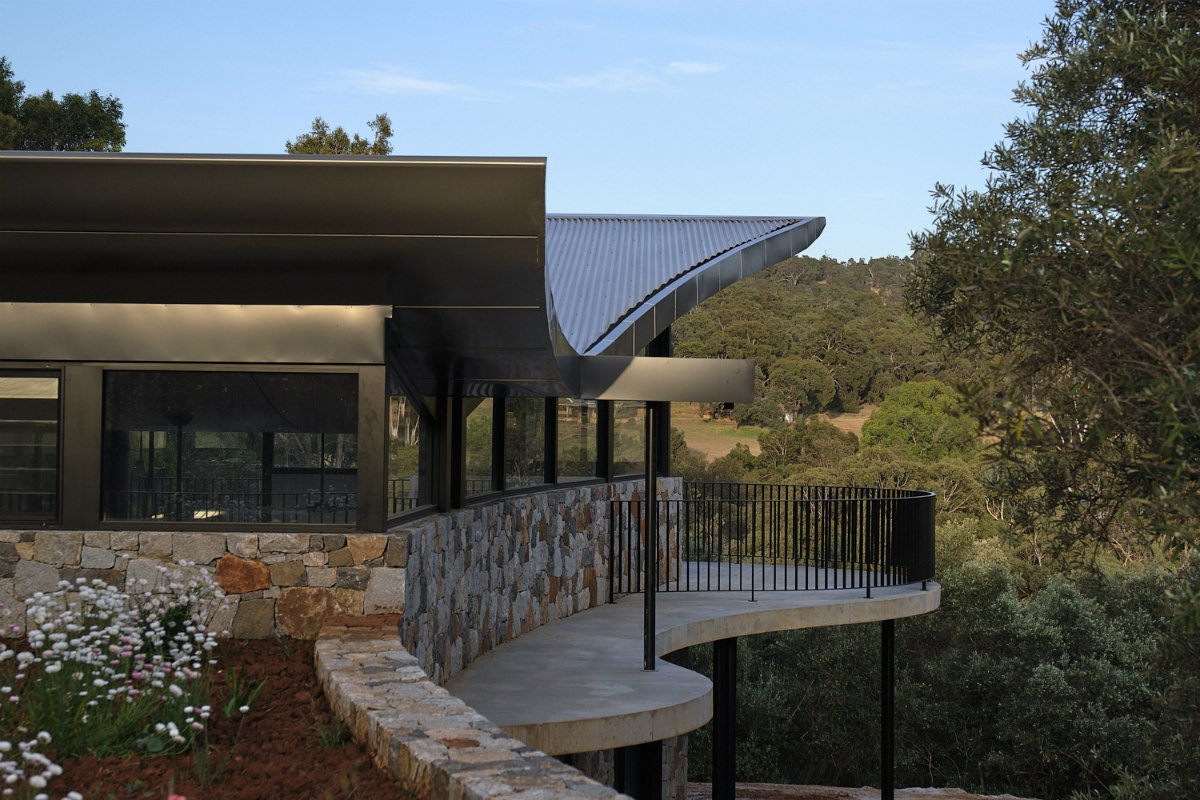
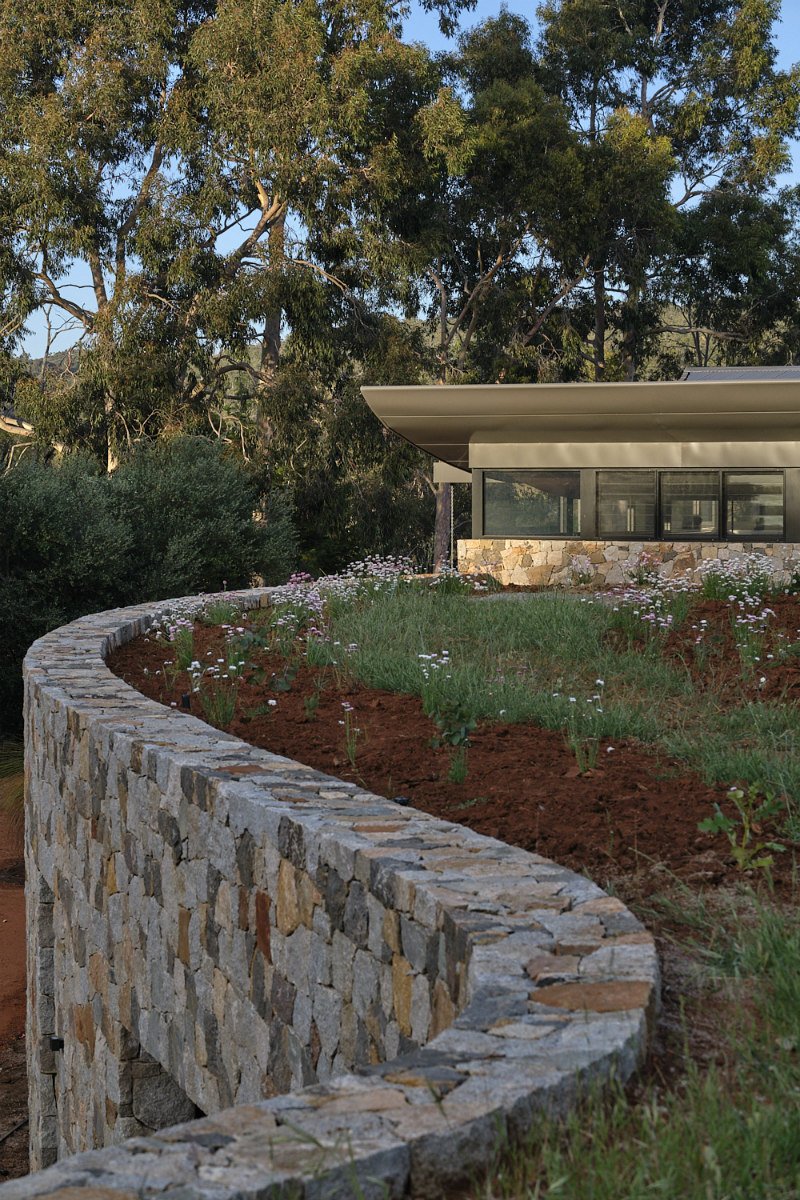
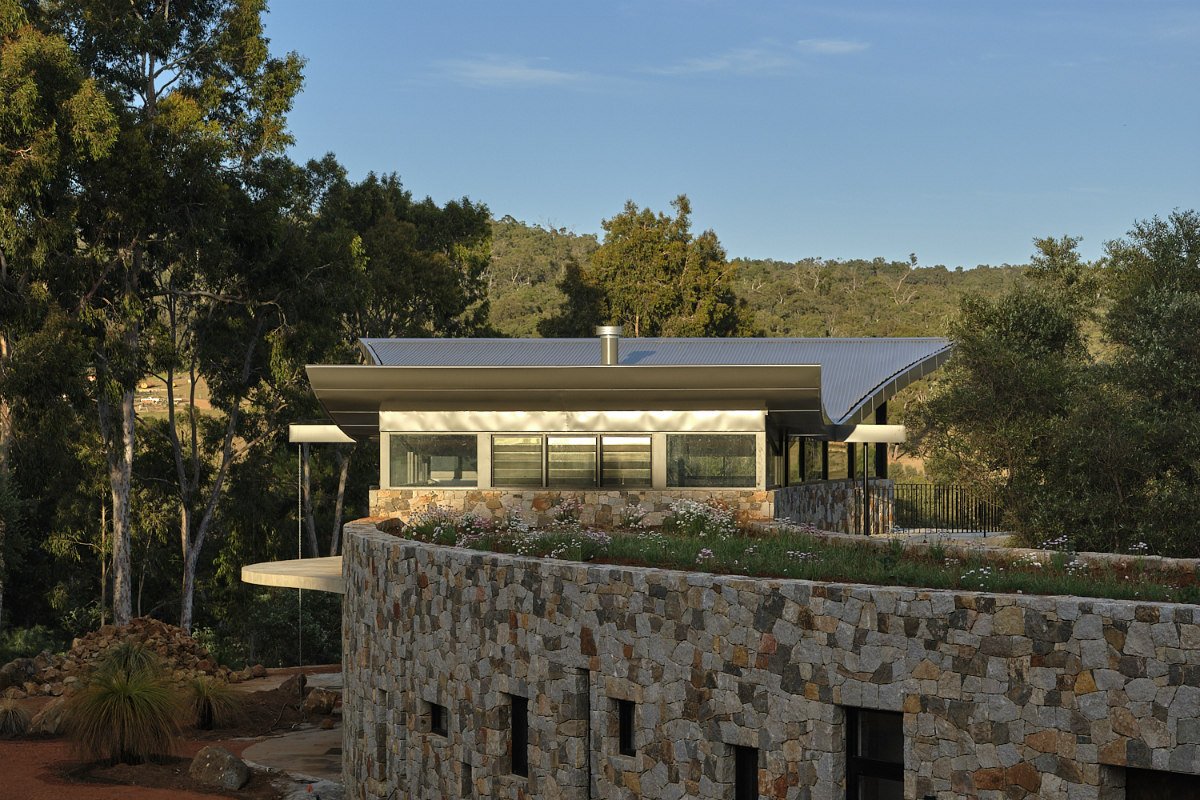
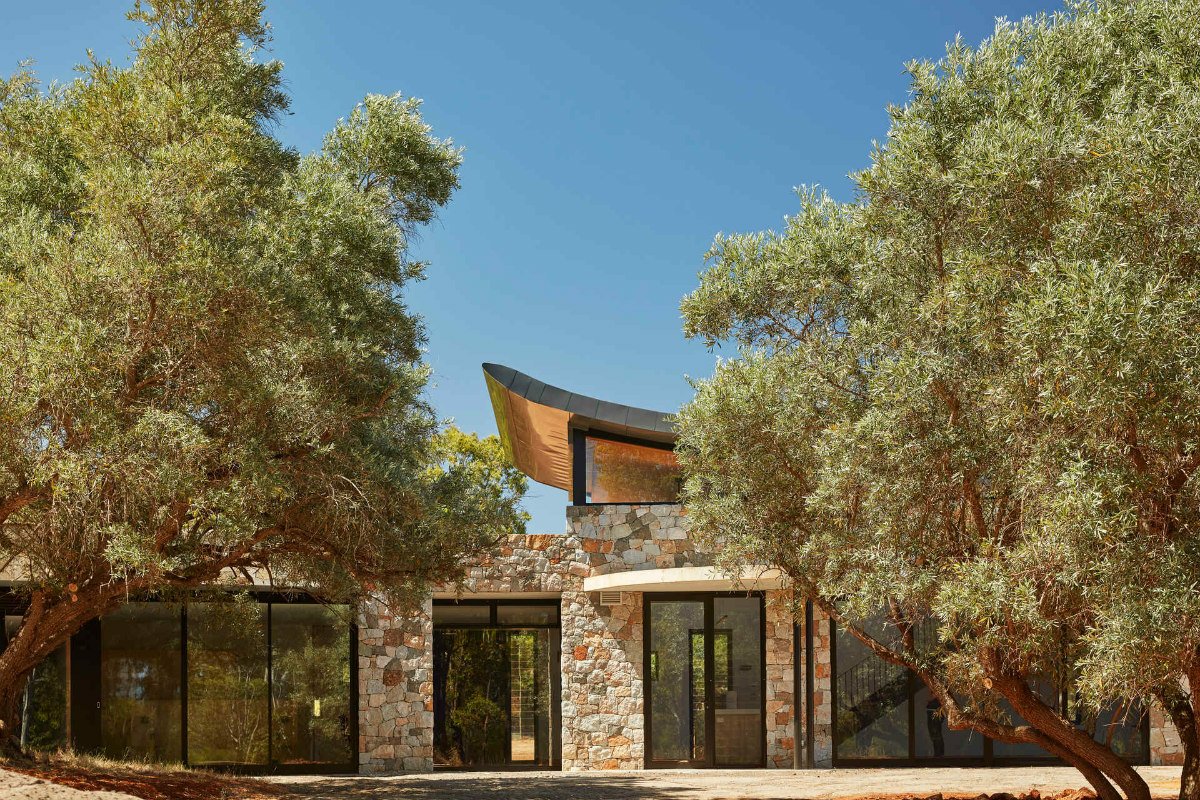
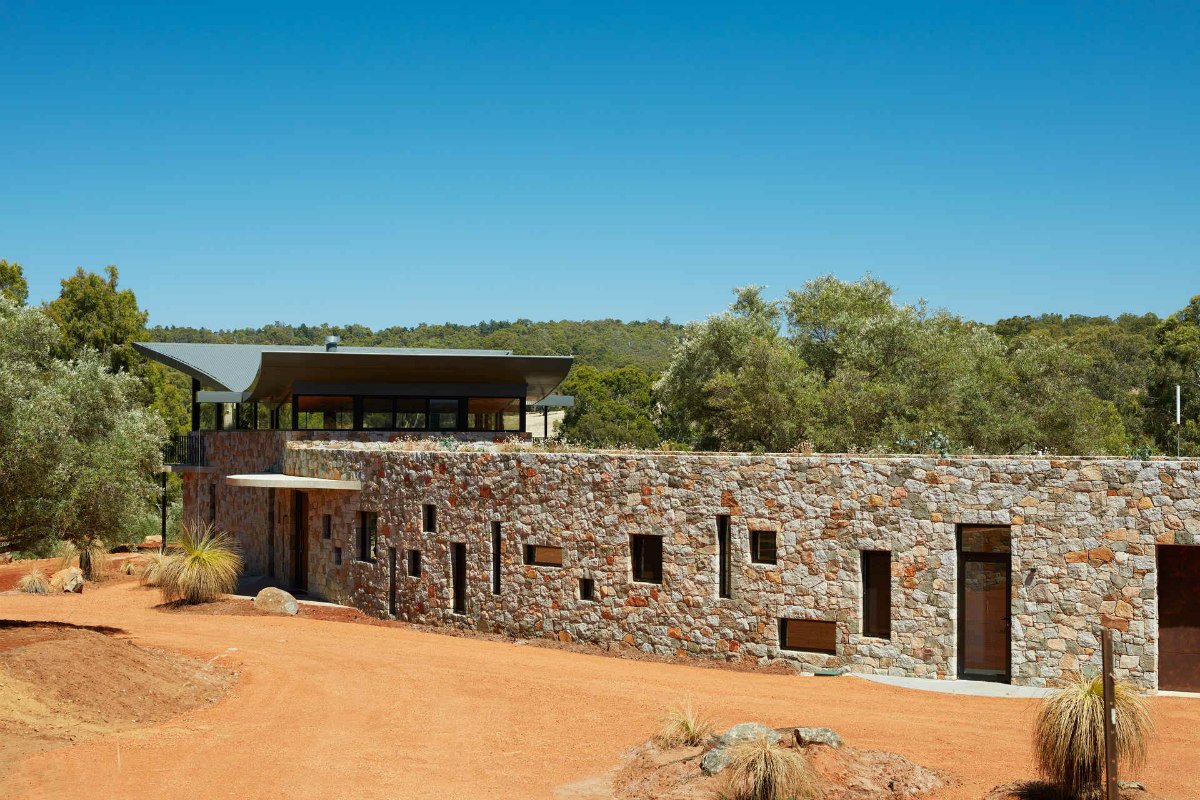
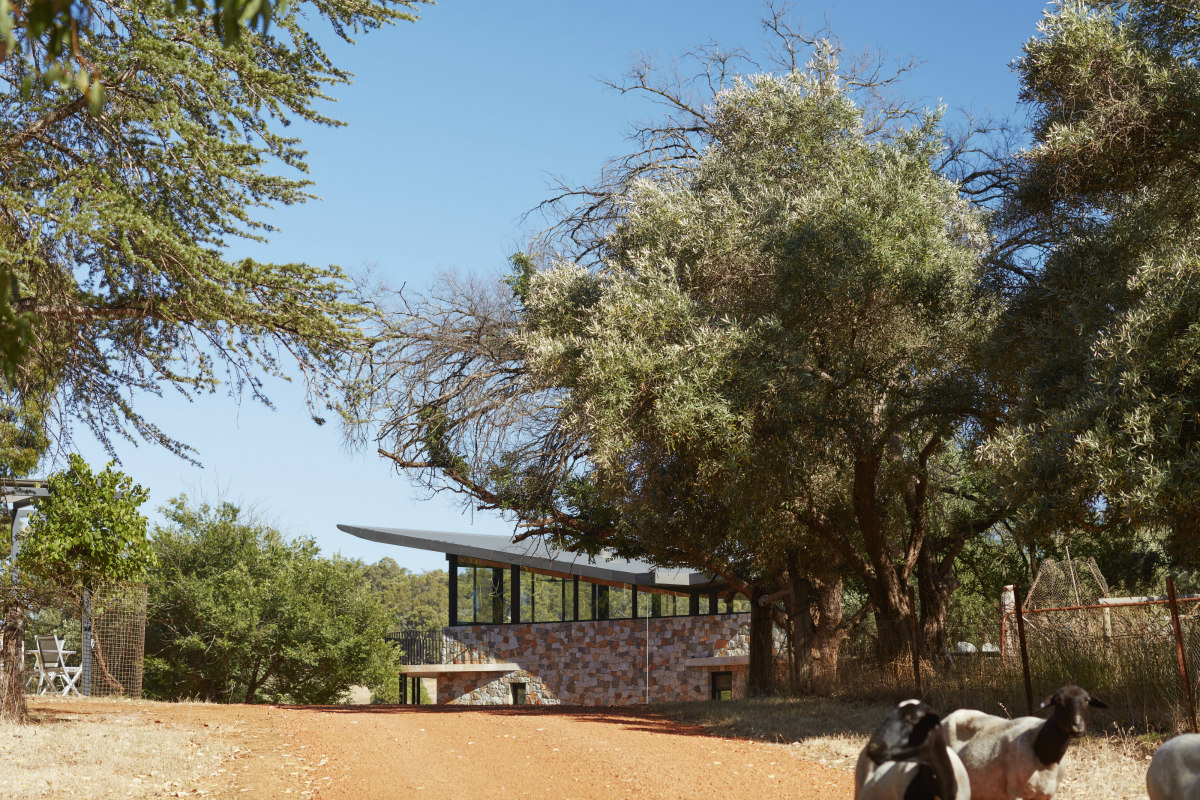
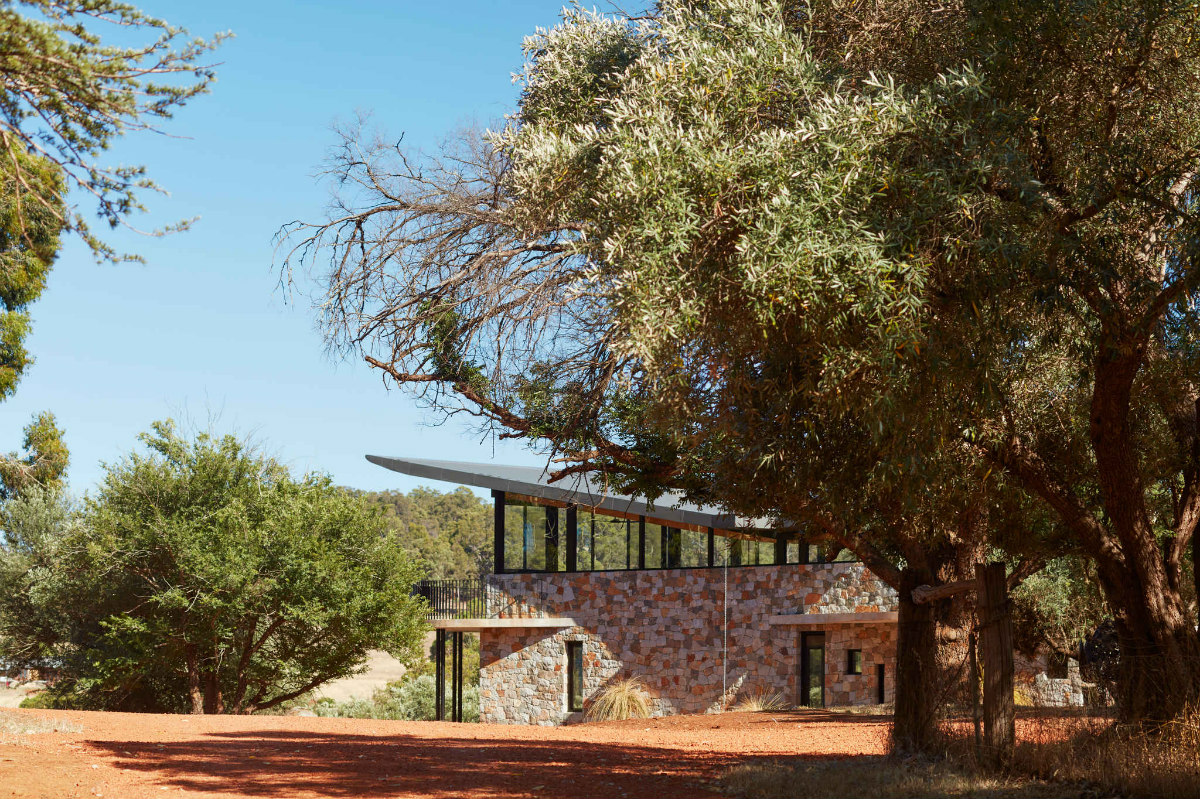
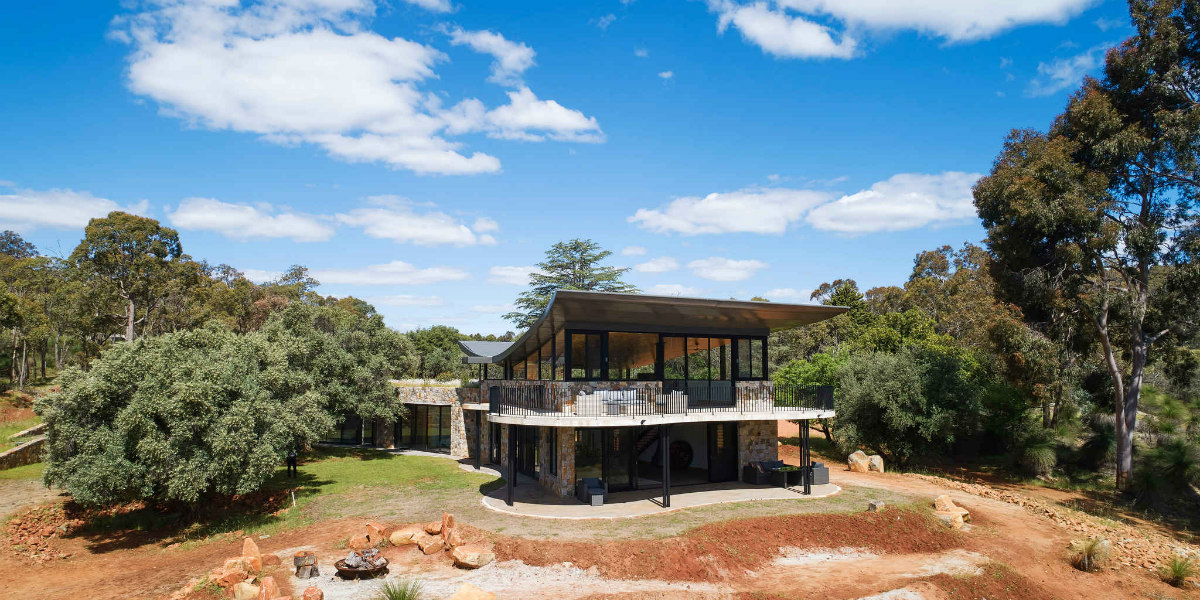
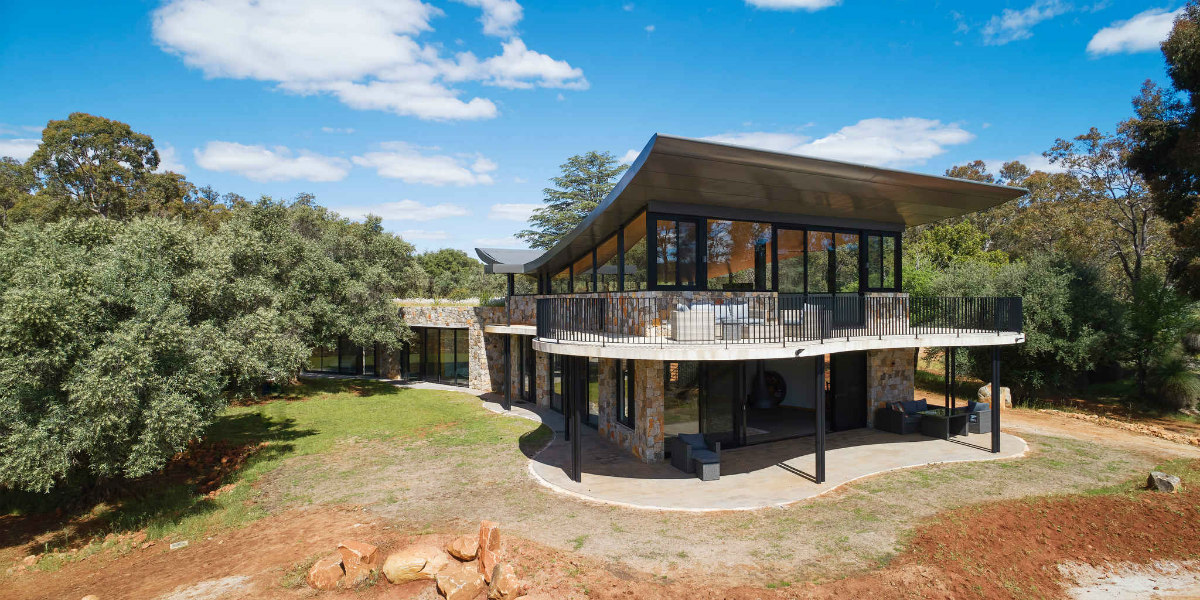
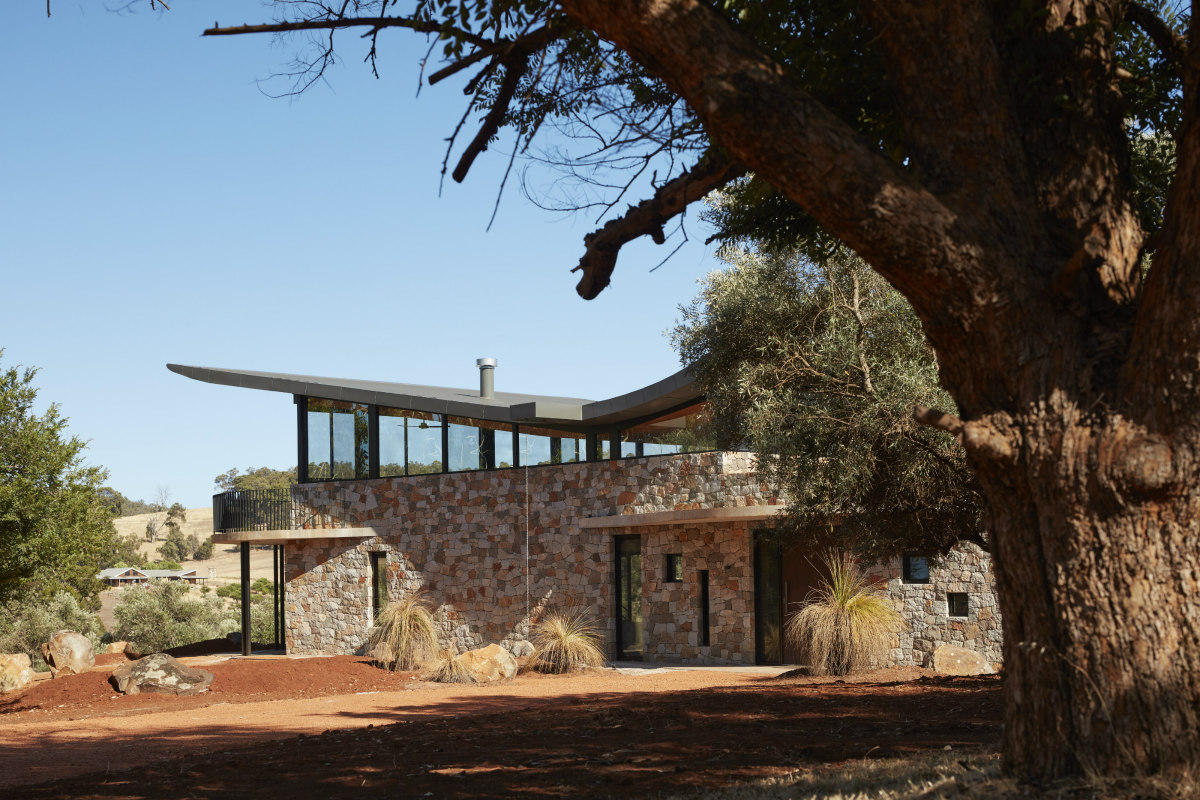
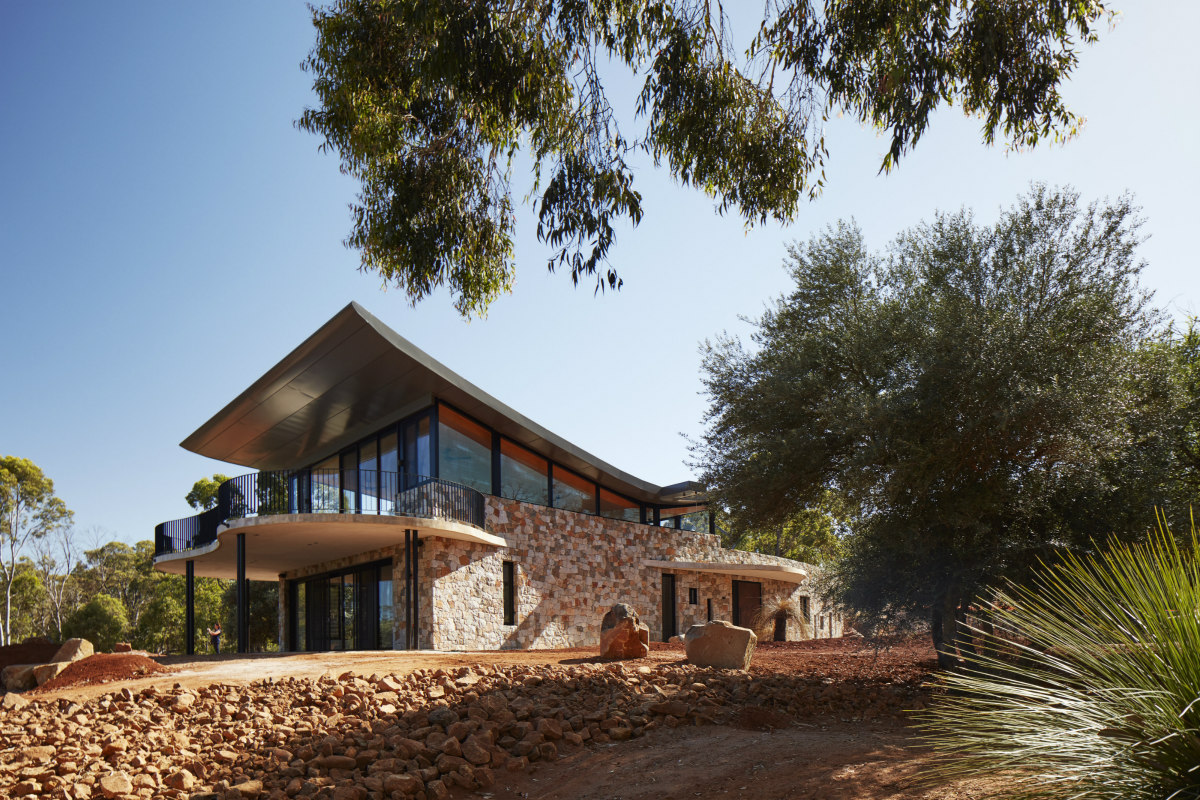
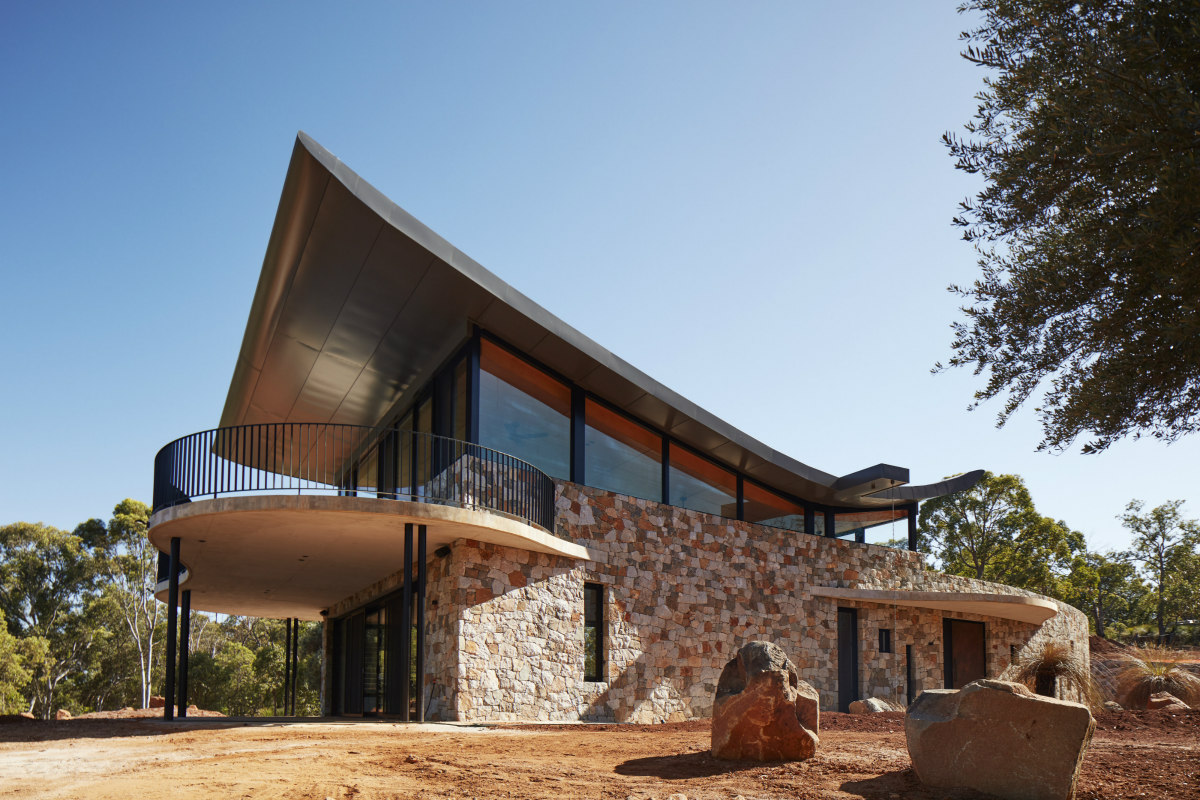
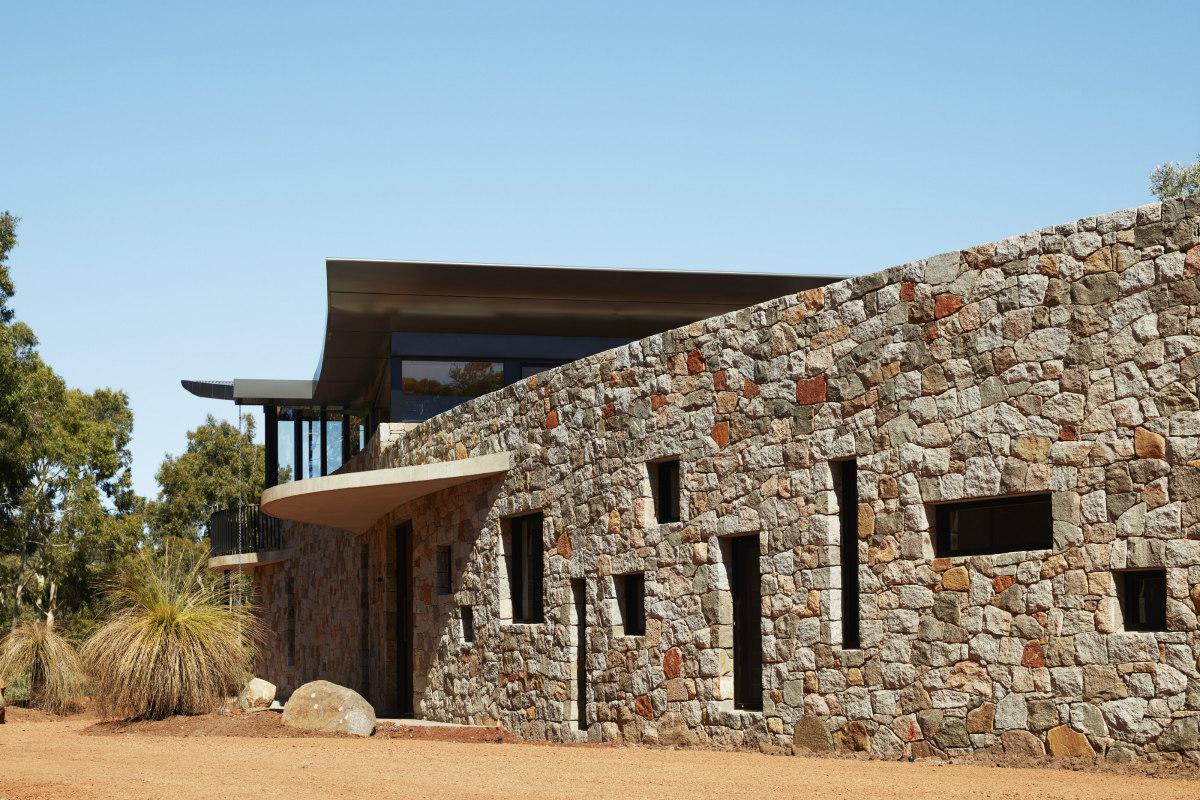
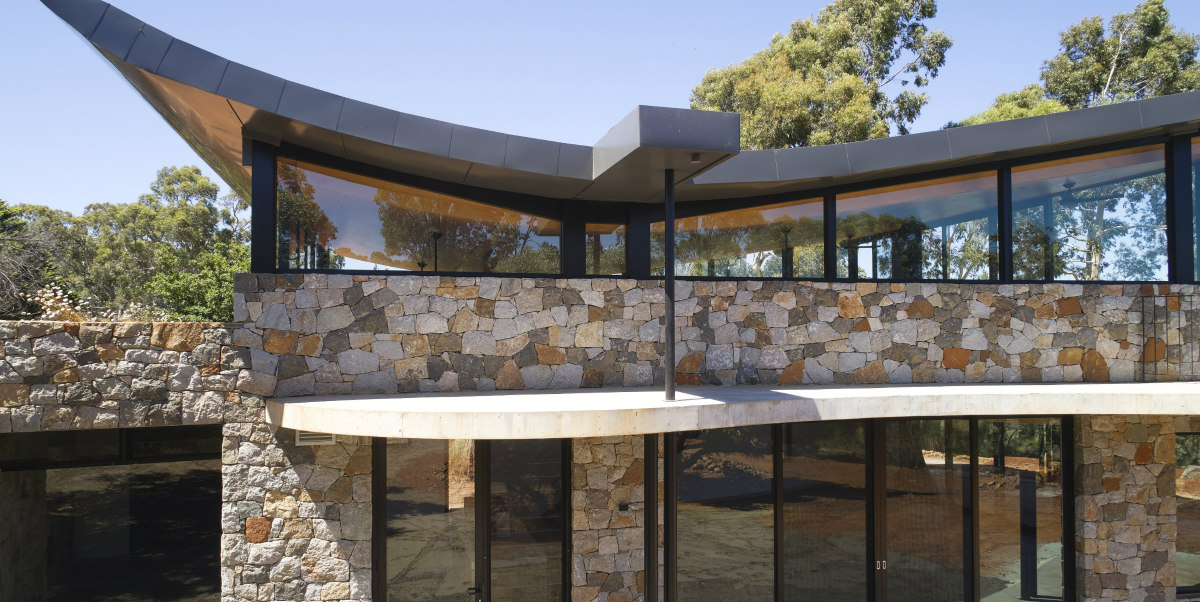
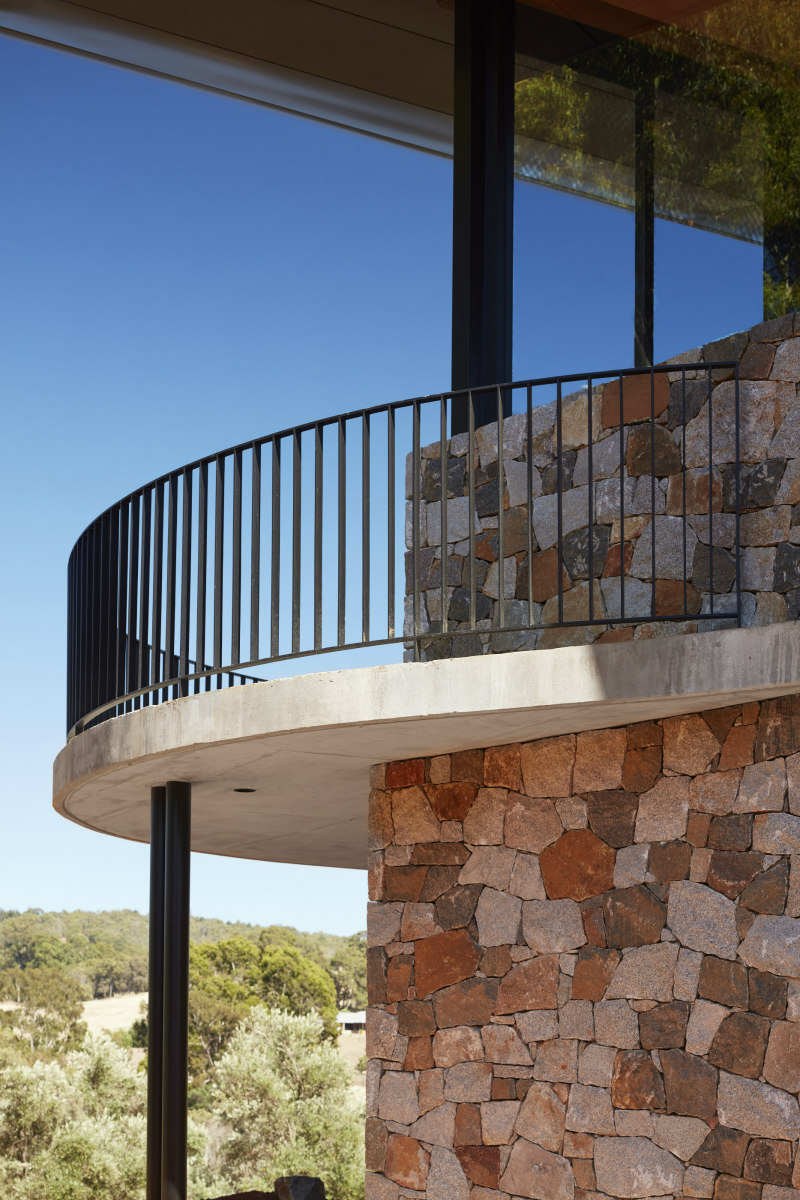
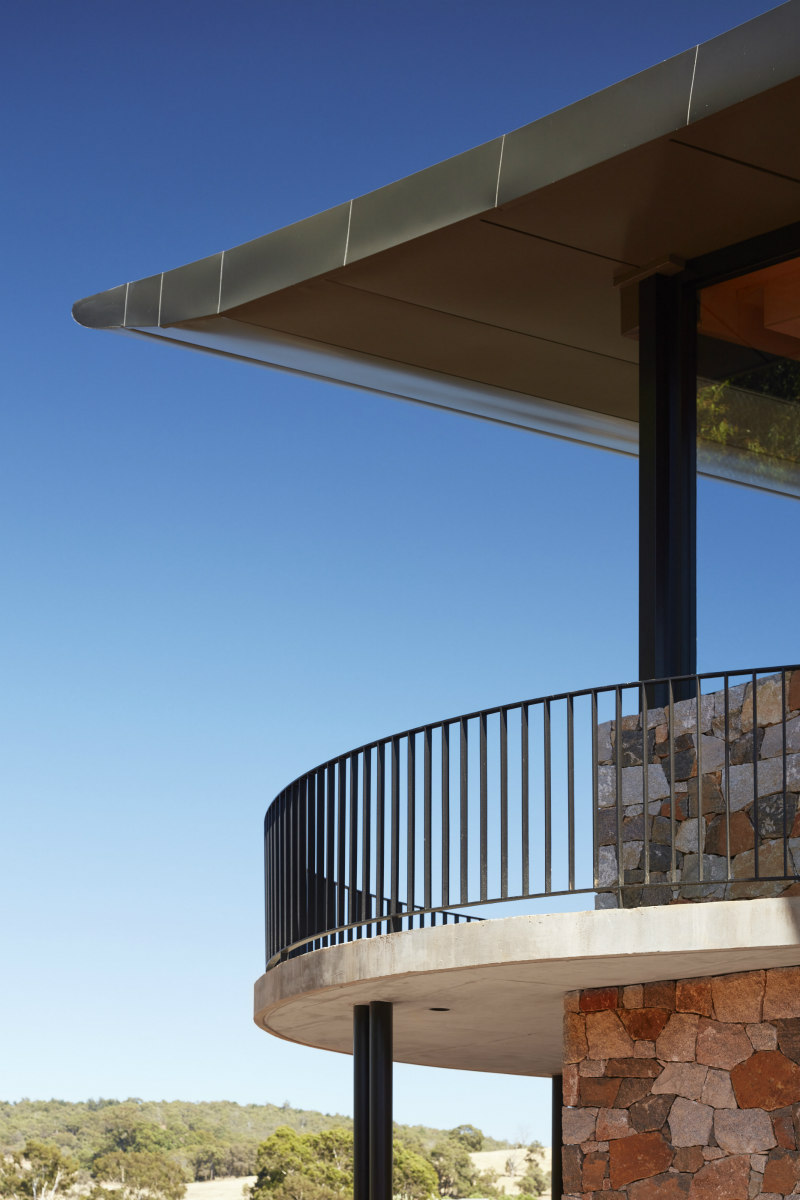
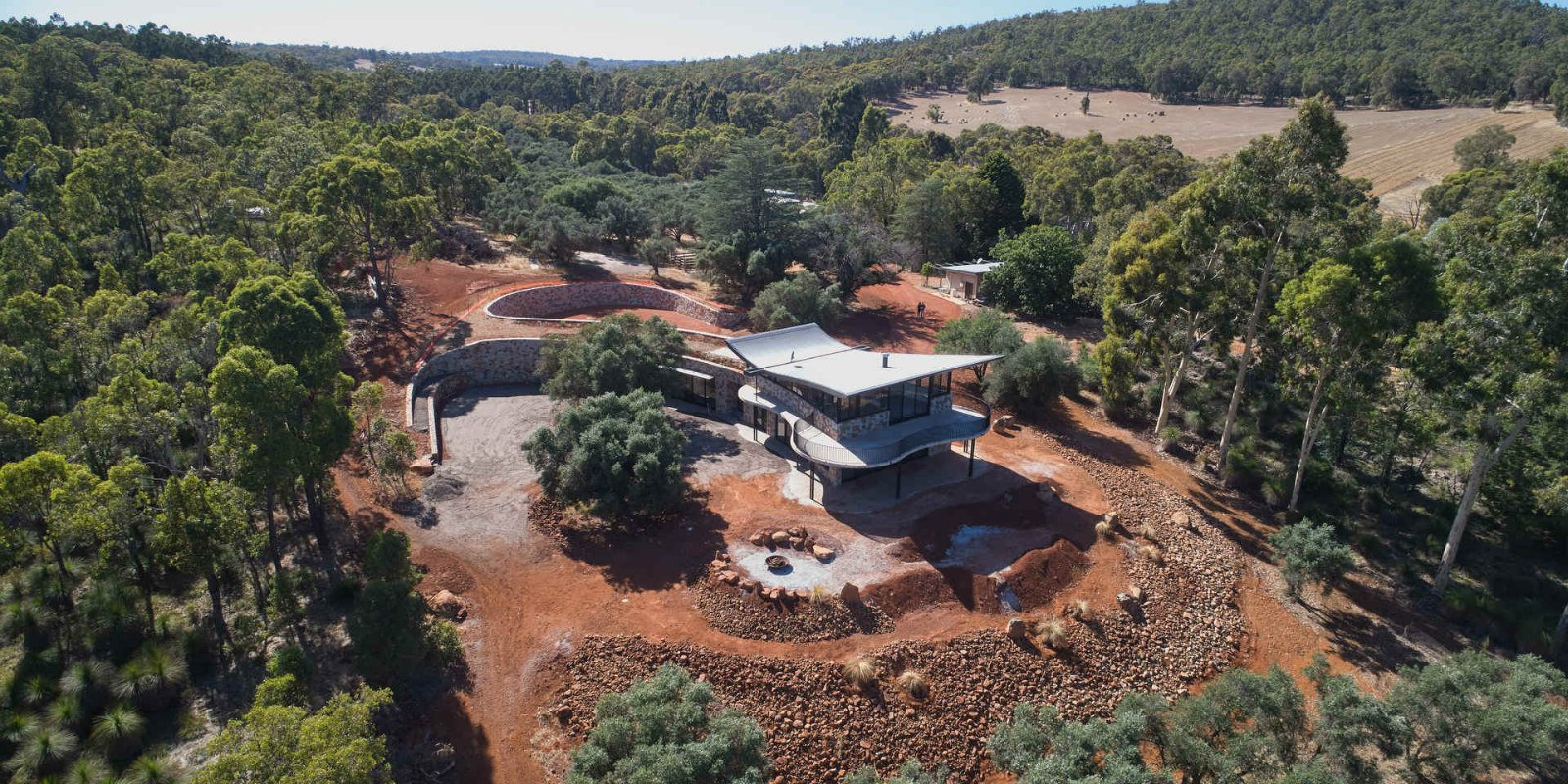
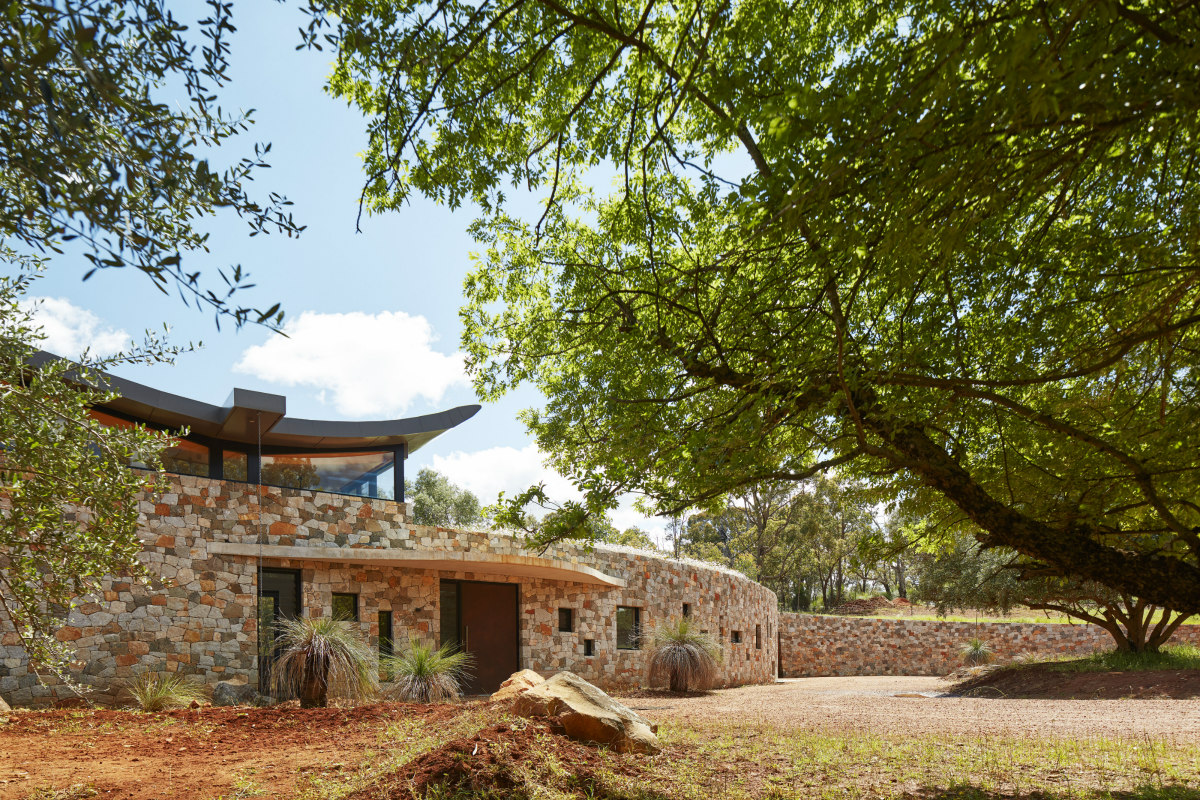
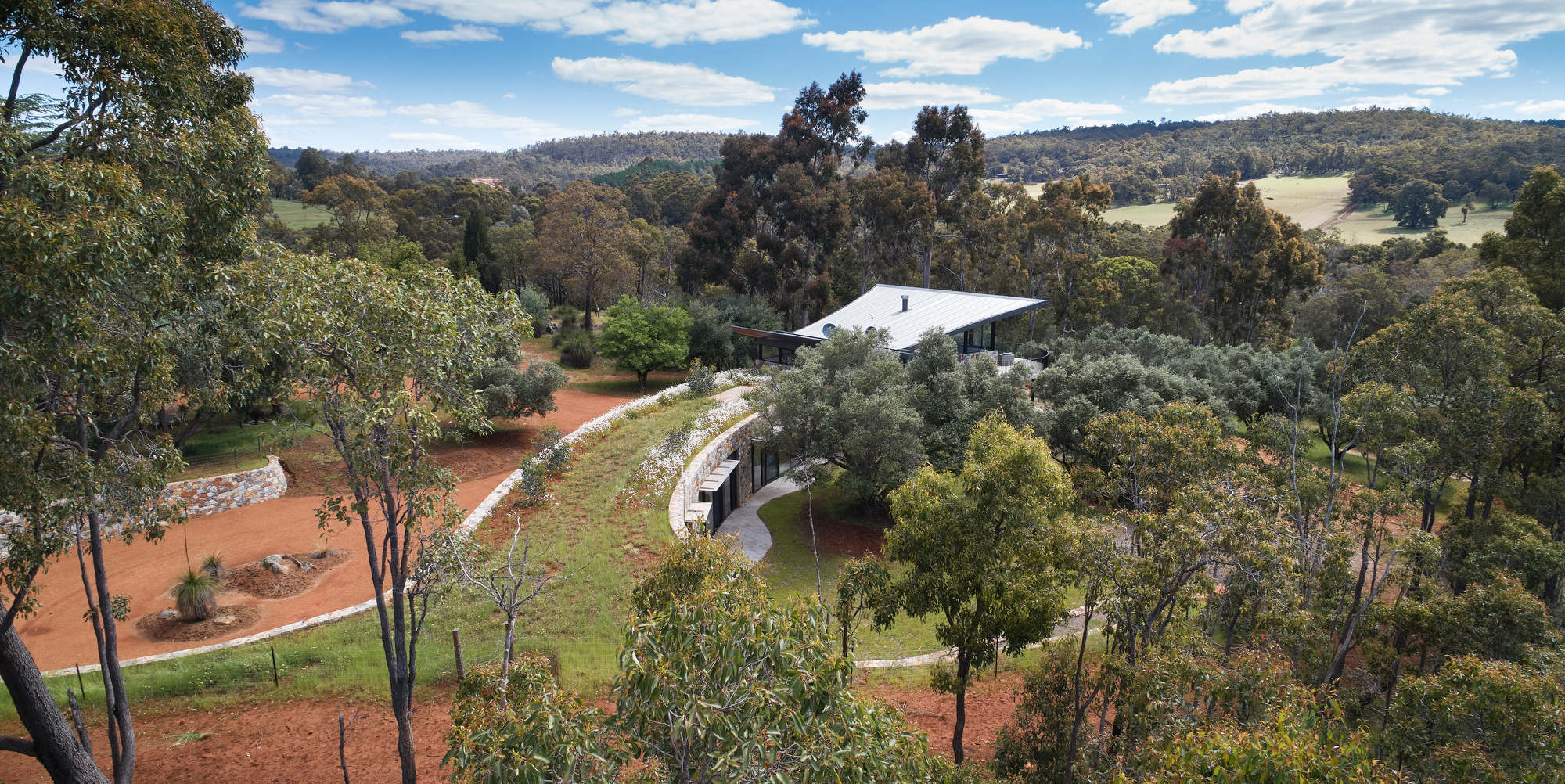
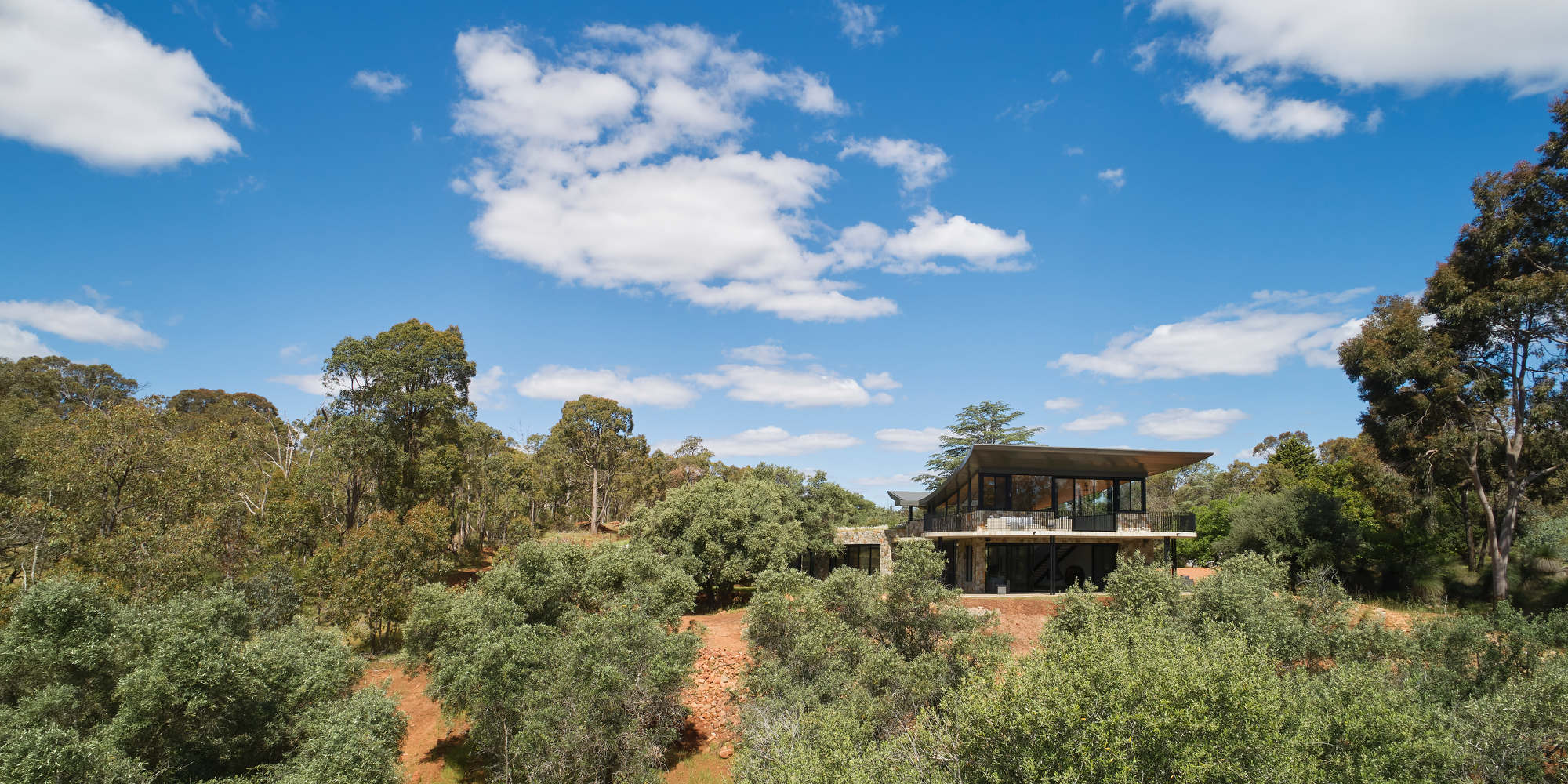
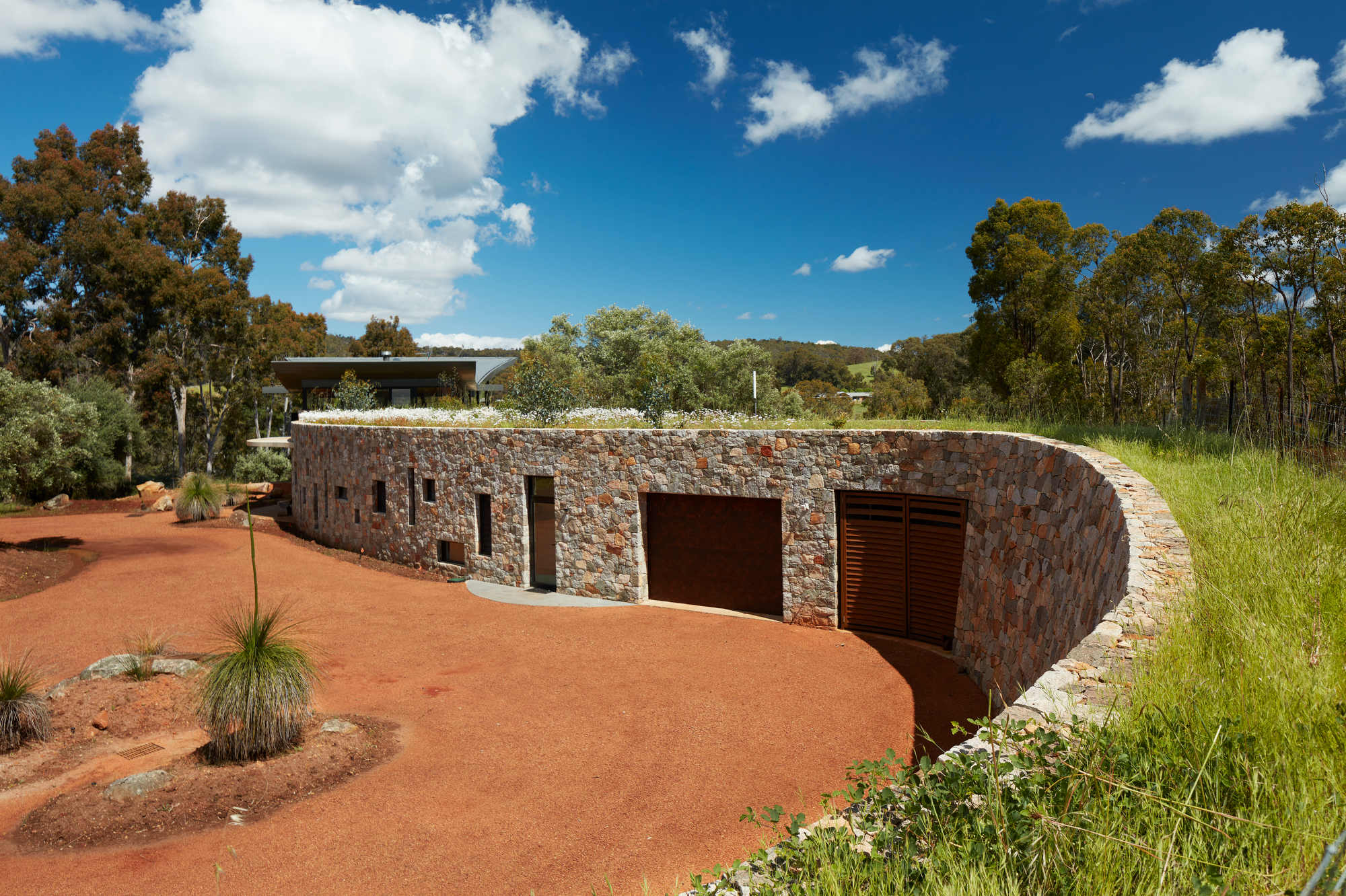
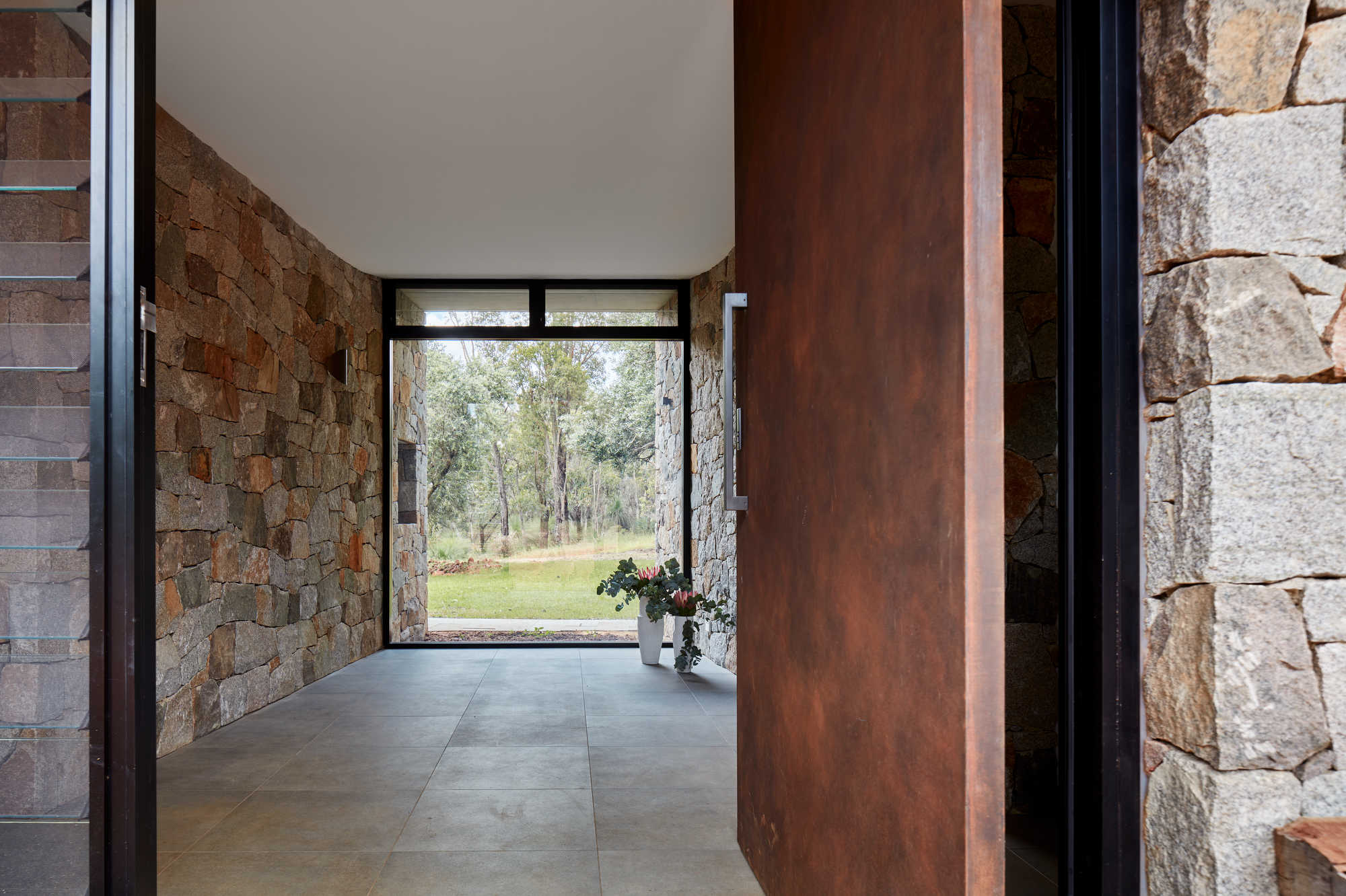
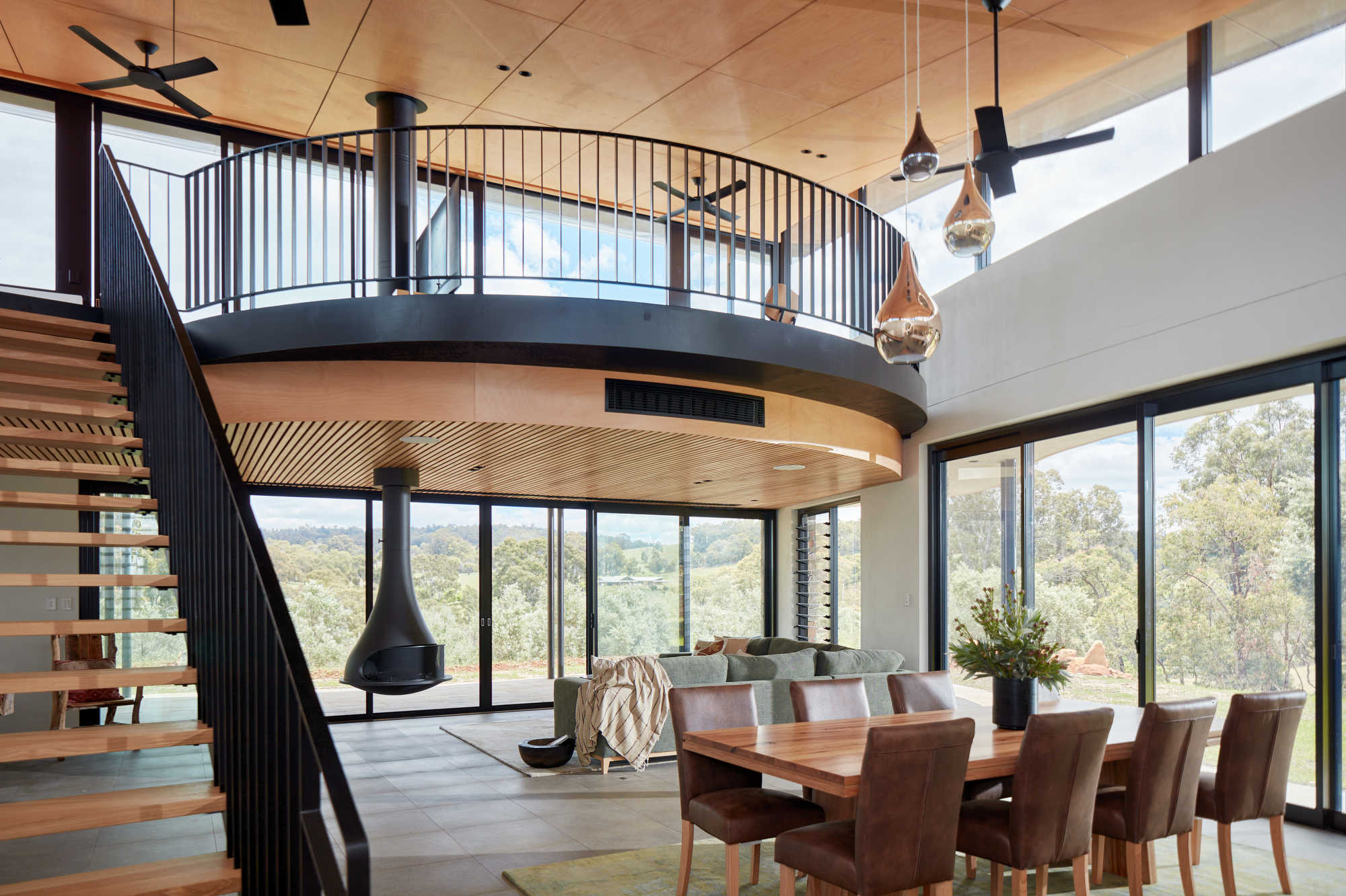
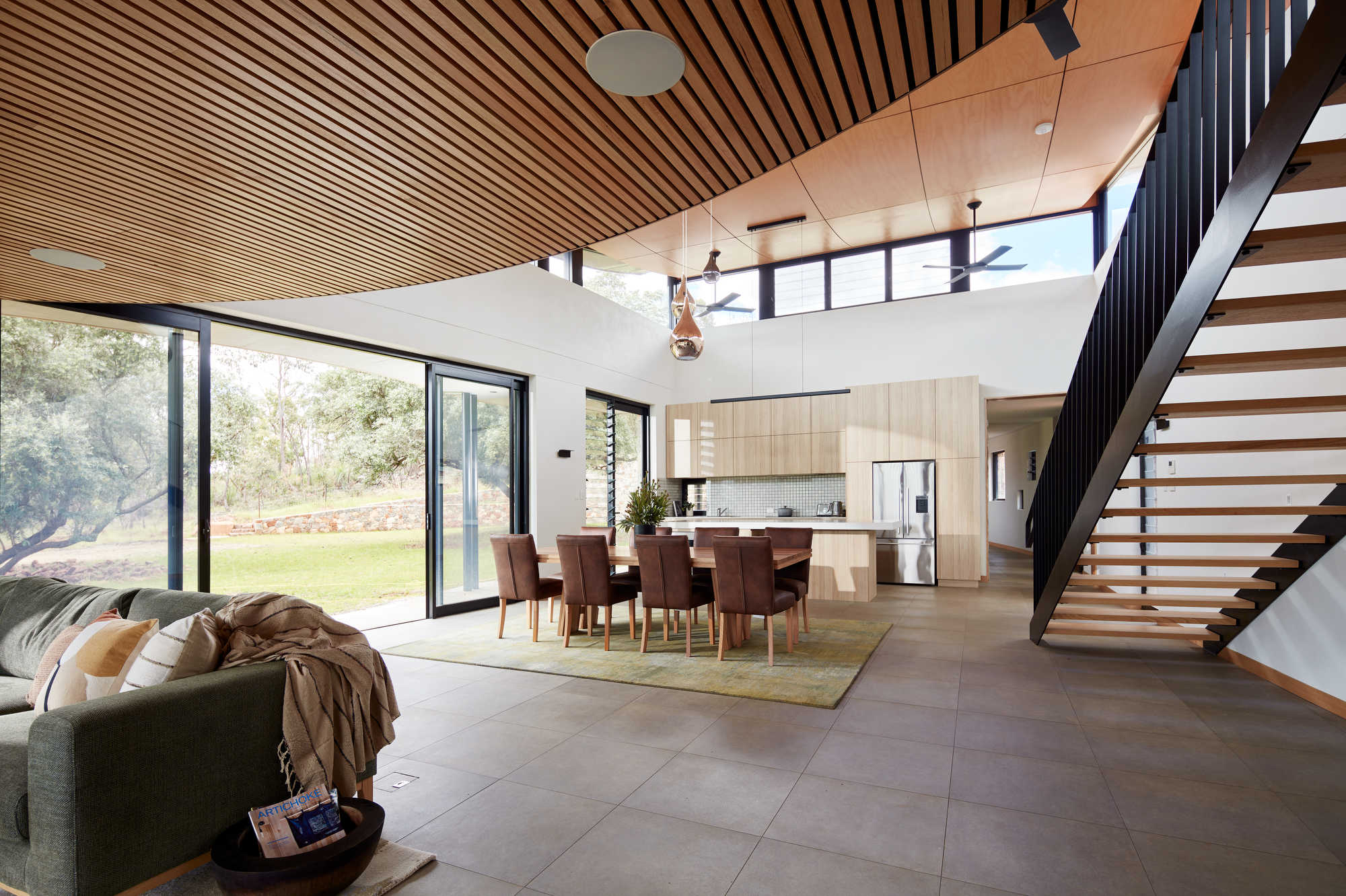
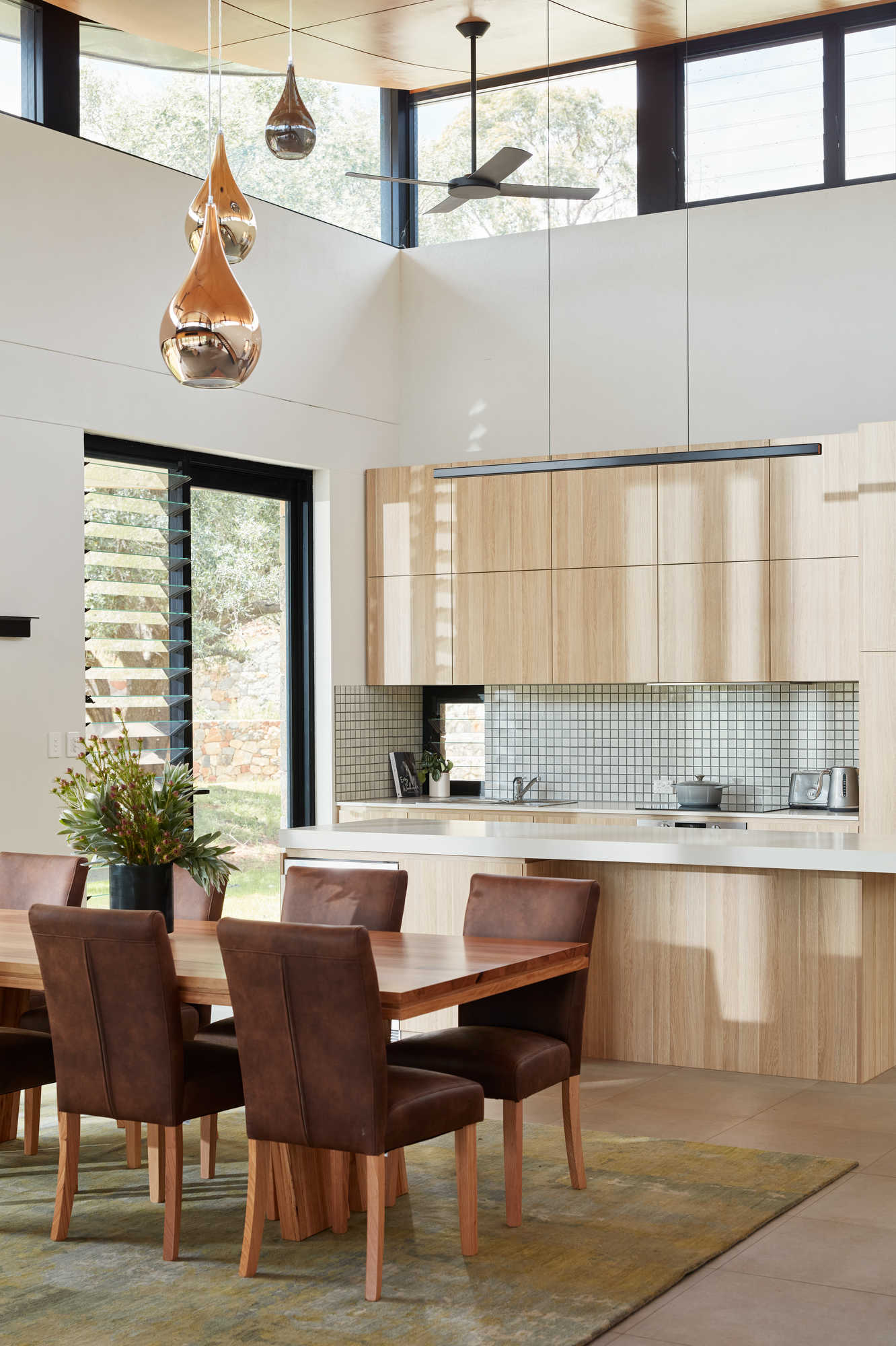
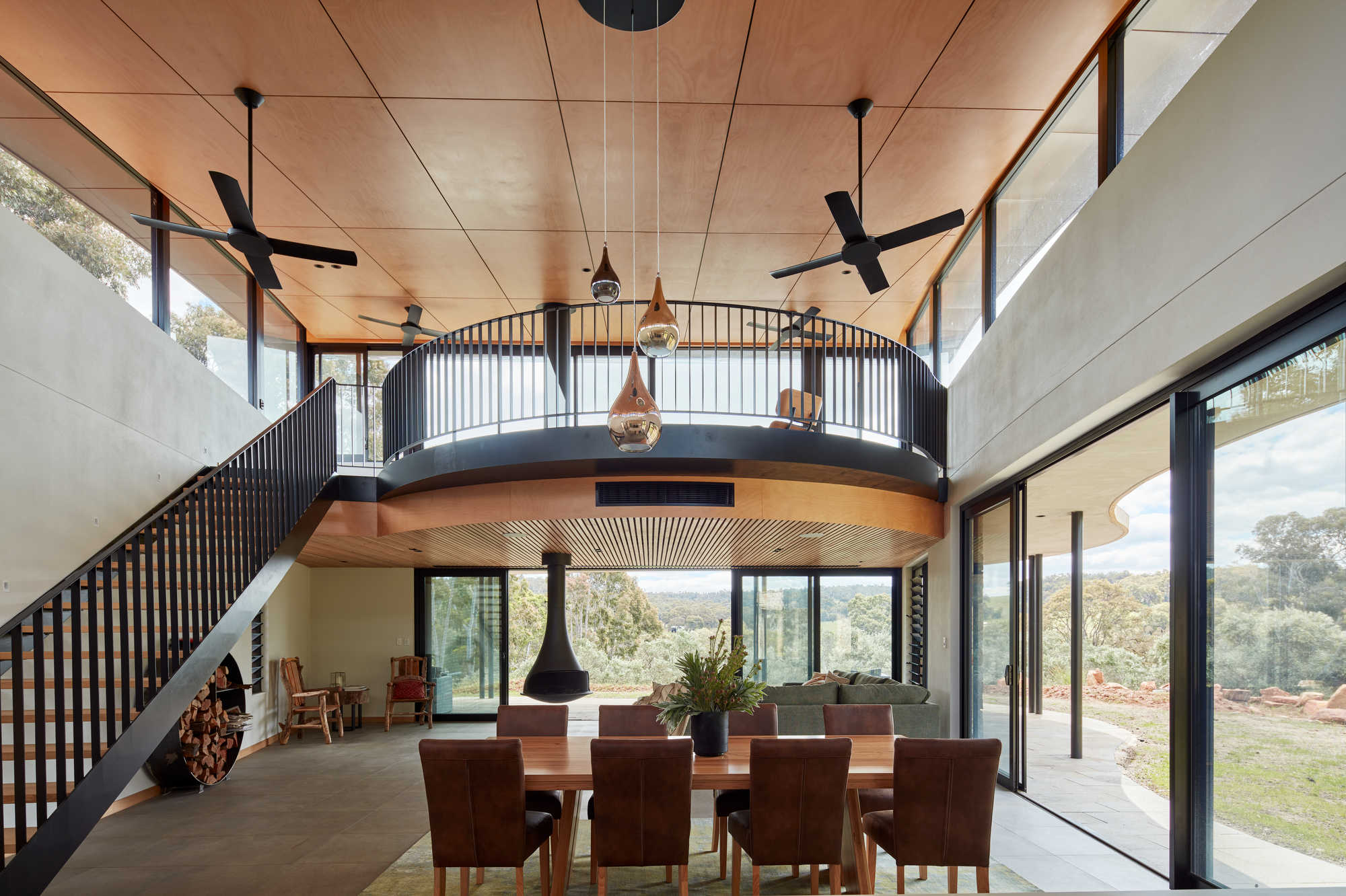
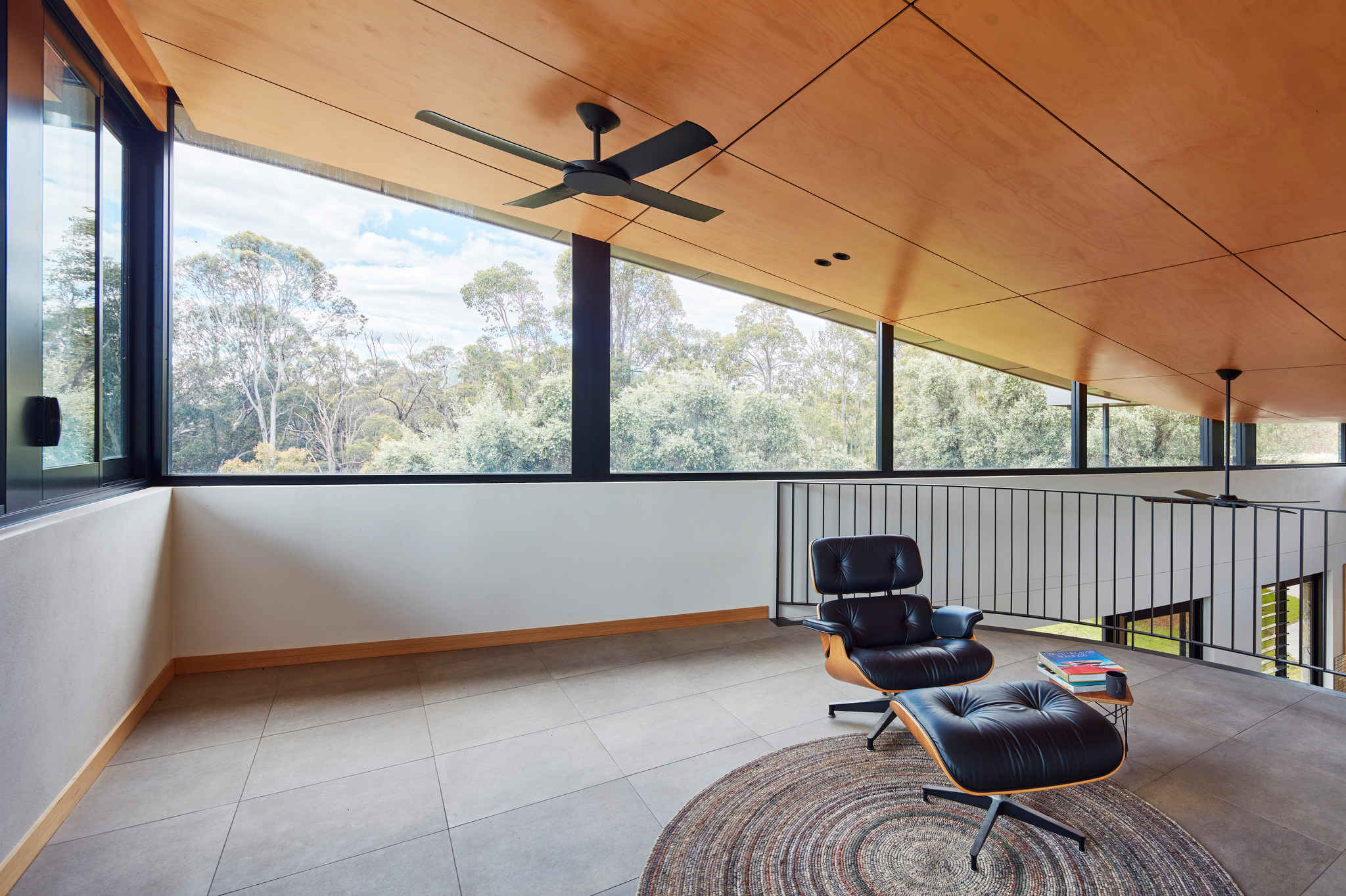
The aesthetic of Stone-House is at one with nature. Influenced by nature’s curves, the undulating site, native trees and bush, the strong but elegant form emerges from the hillside resembling an extended branch from the surrounding gums. The hill flows gently over the accommodation wing forming a green roof, entirely self-seeded by local indigenous species. The living wing is topped by a gently floating butterfly roof over high-level windows offering distant views and cross ventilation. The roof design has been deliberately kept below surrounding tree canopy. The two bed/bathroom/laundry accommodation wing is linked to the open plan double-height living wing by a feature stone entry with Red-Cor door and views to bush. The living mezzanine and balcony opens to treetop views across the valley.
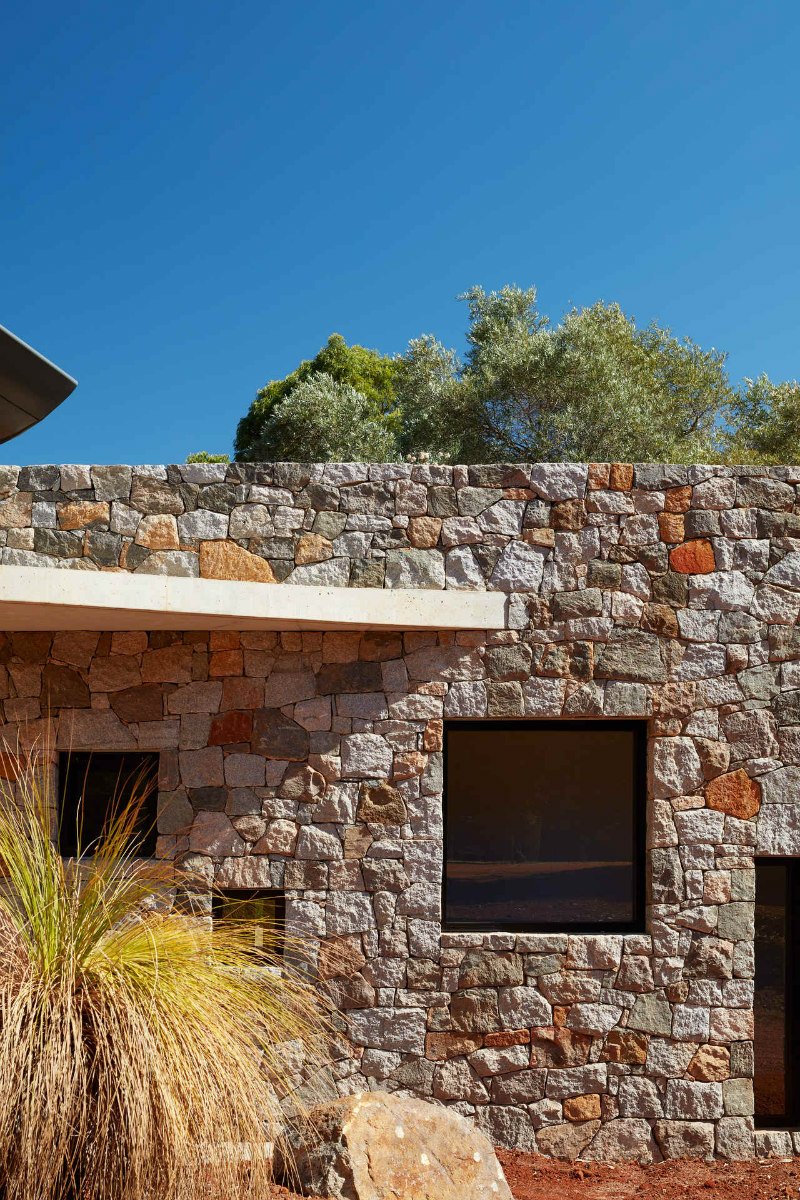
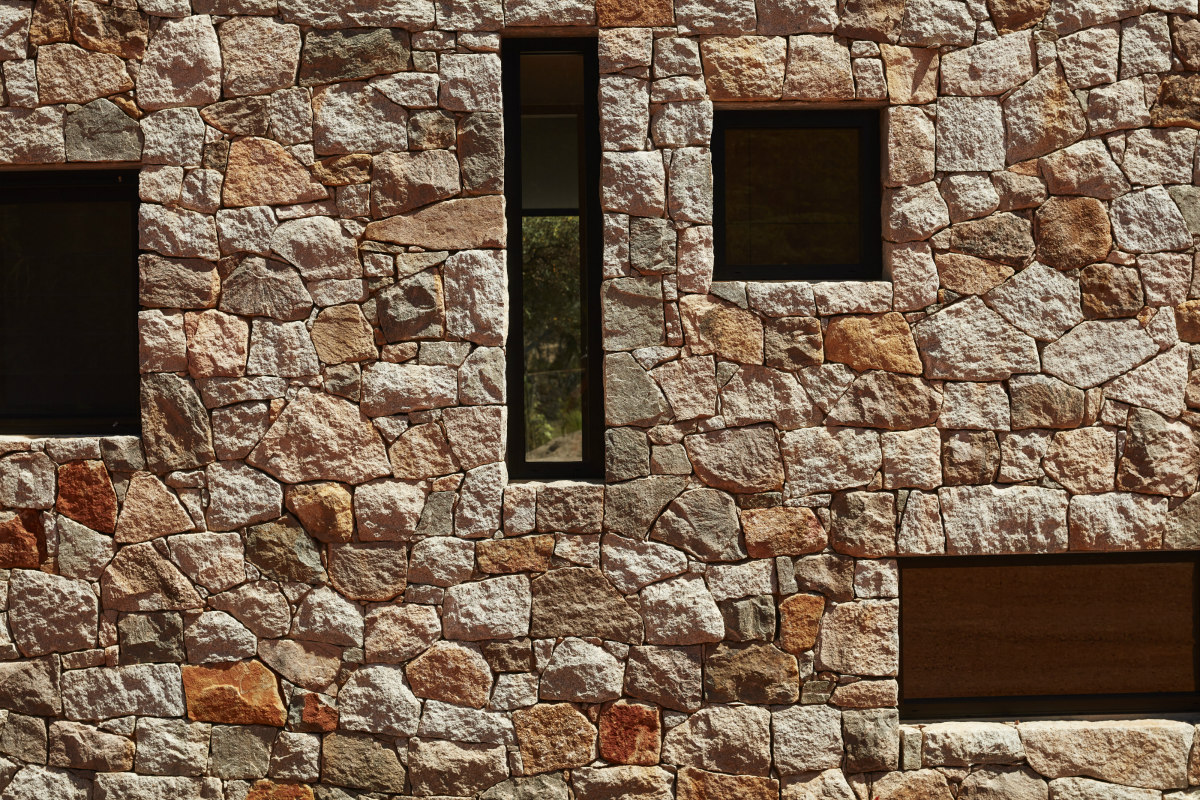
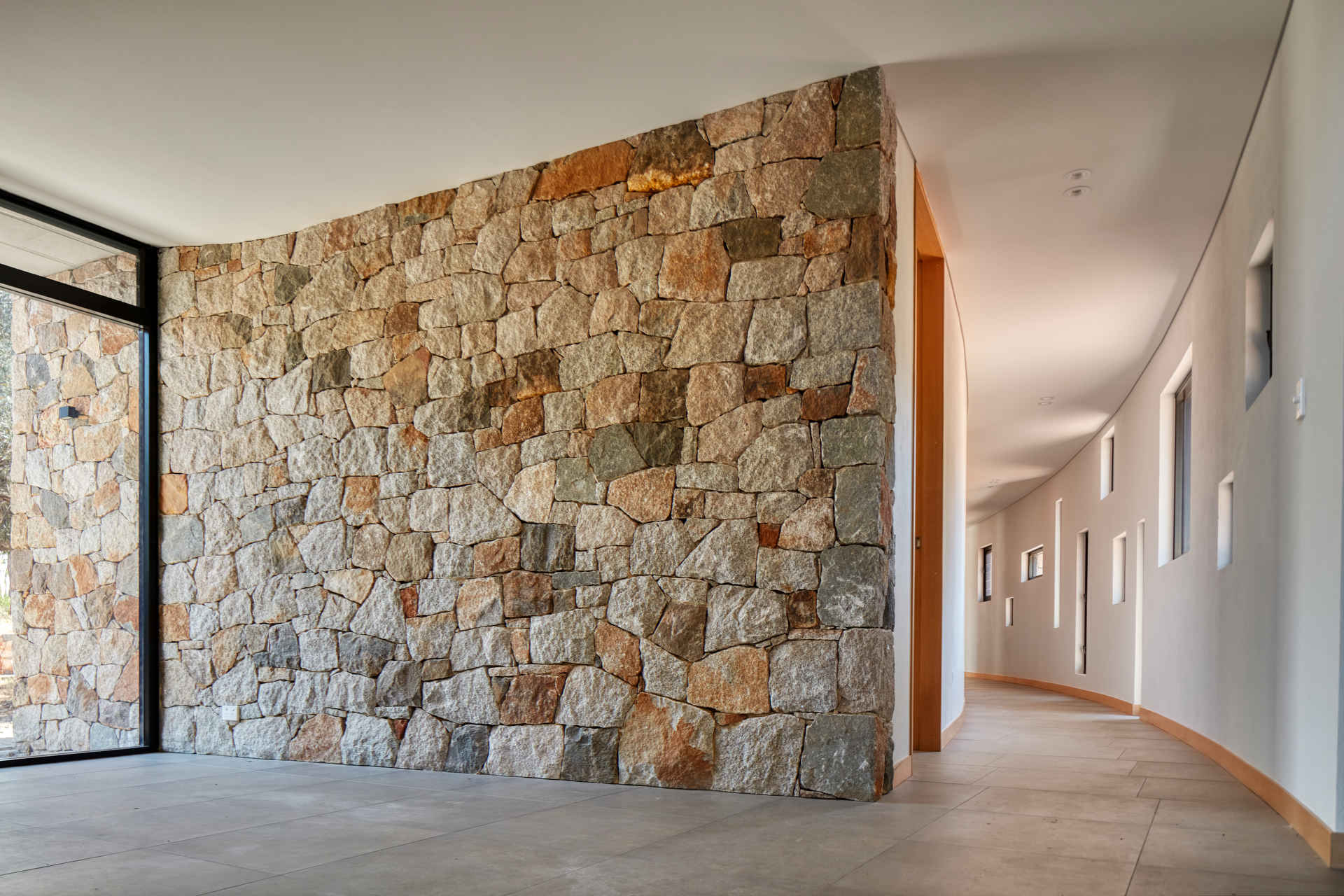
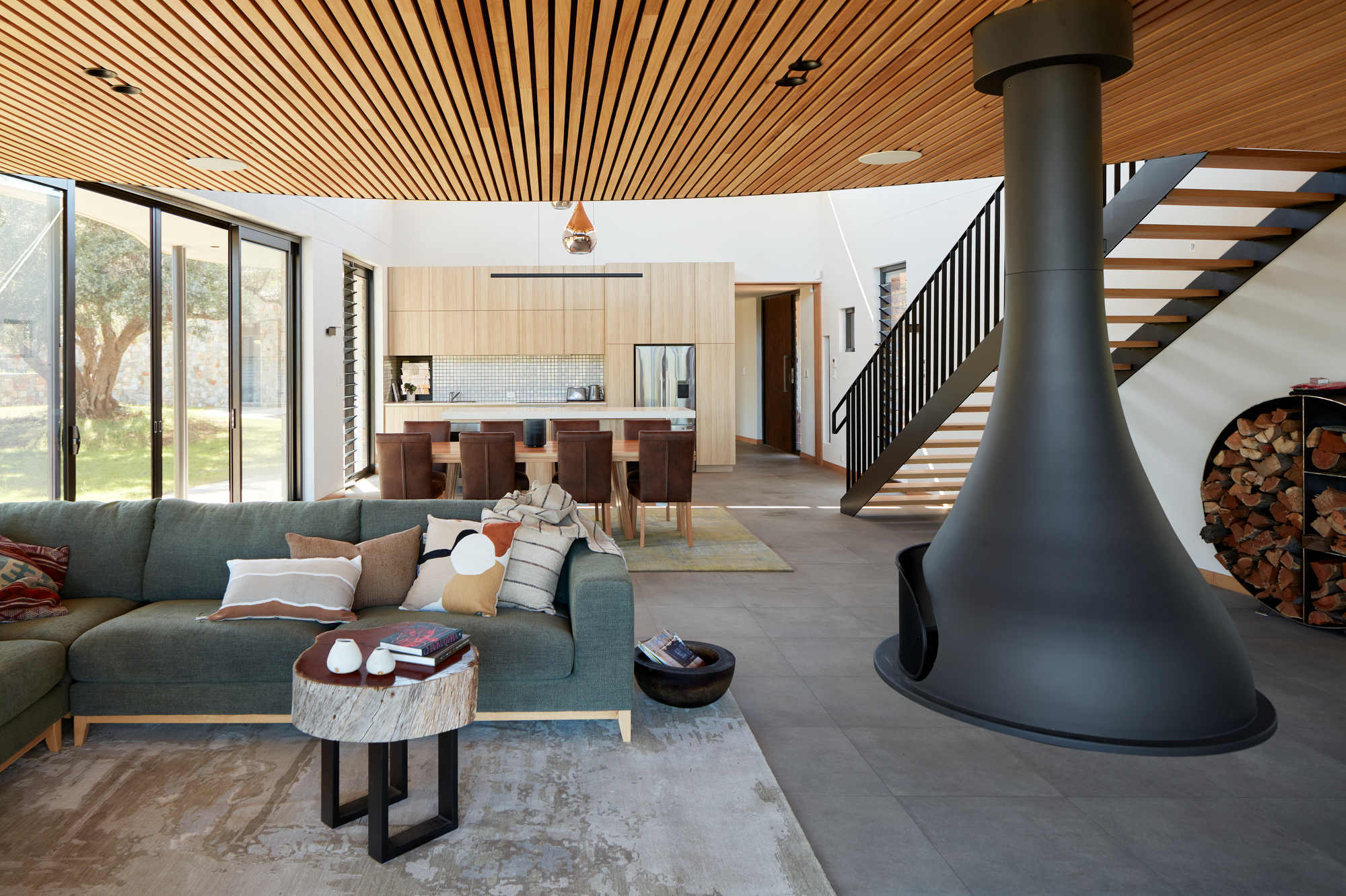
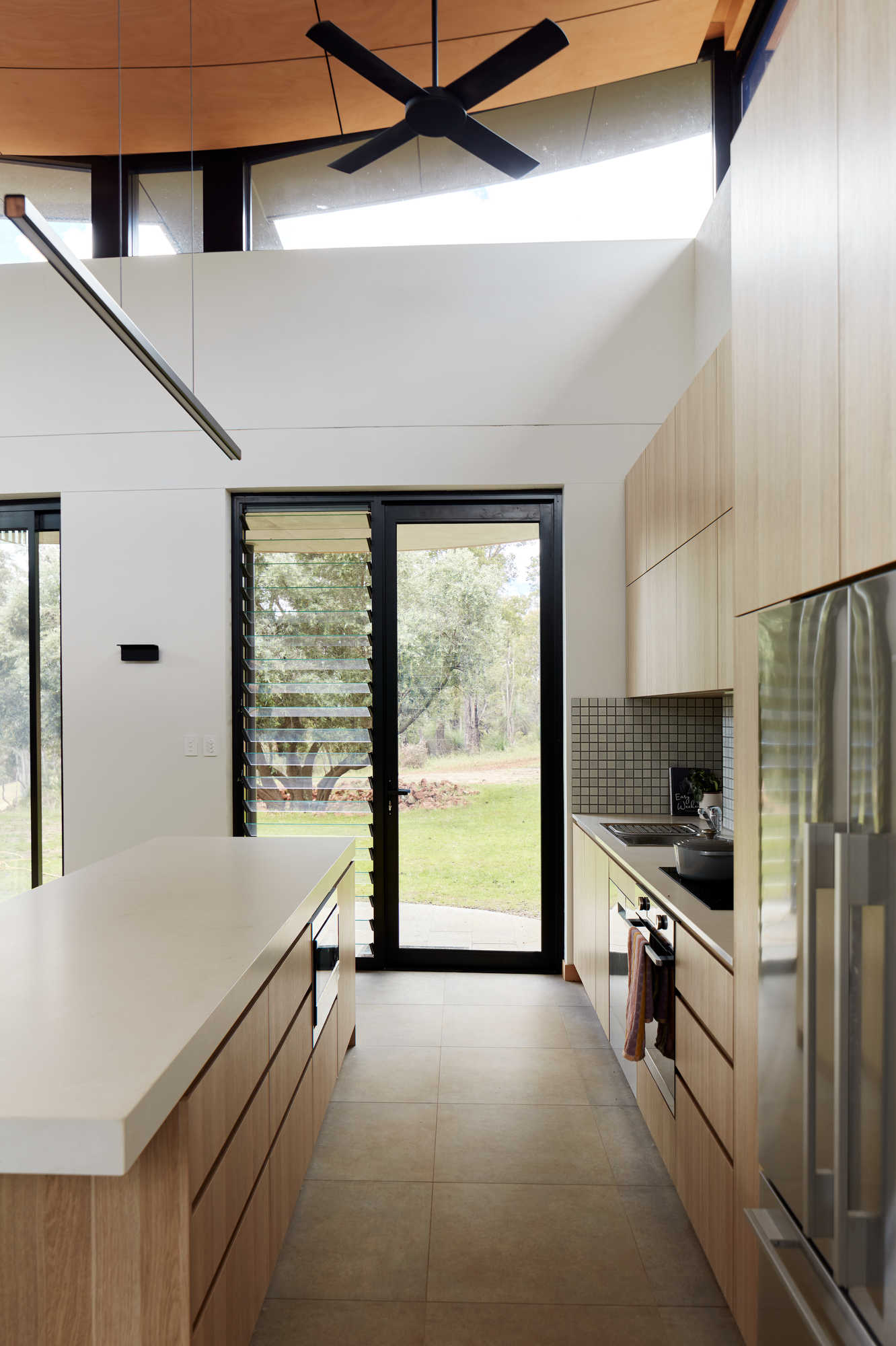
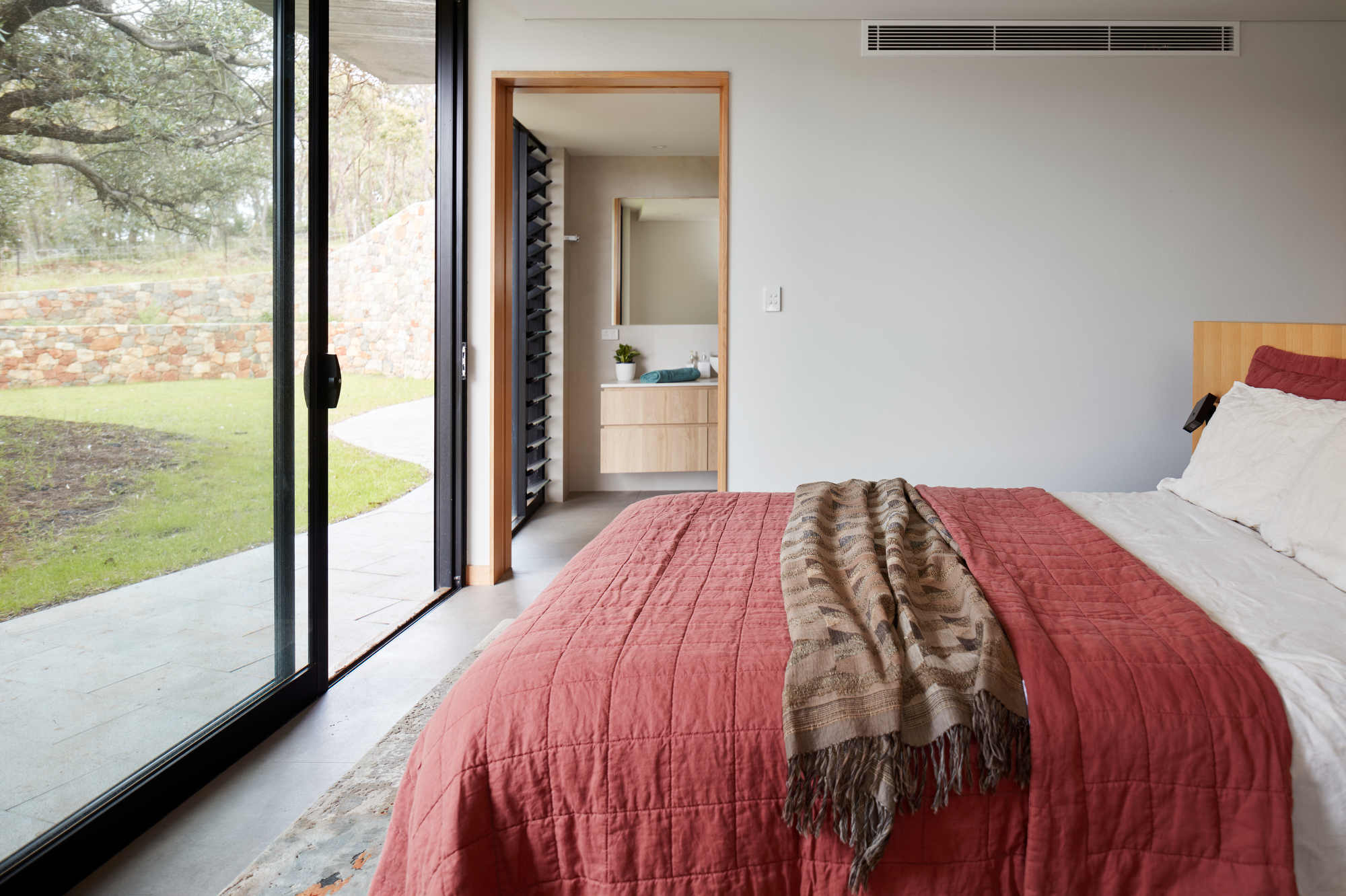
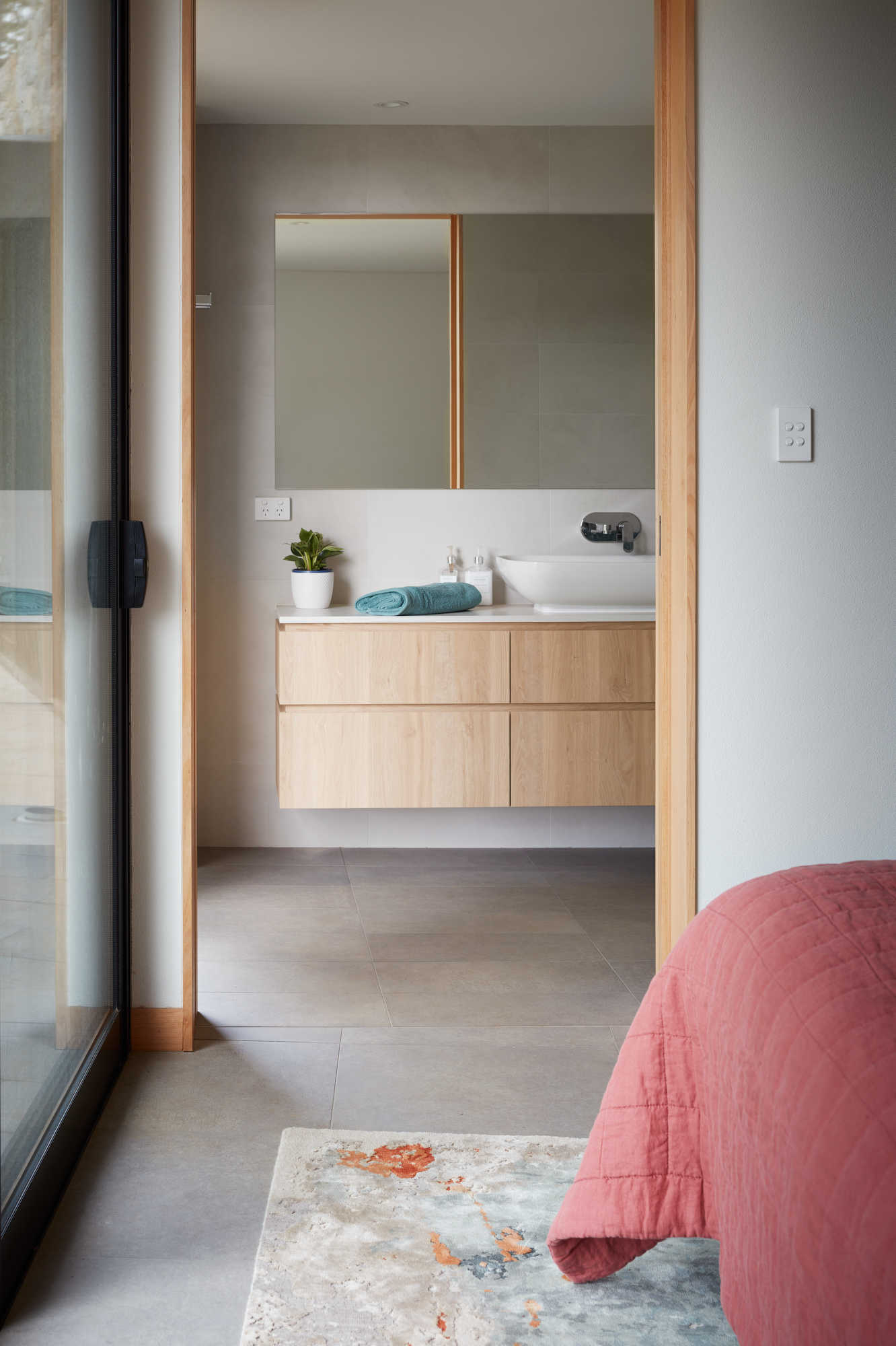
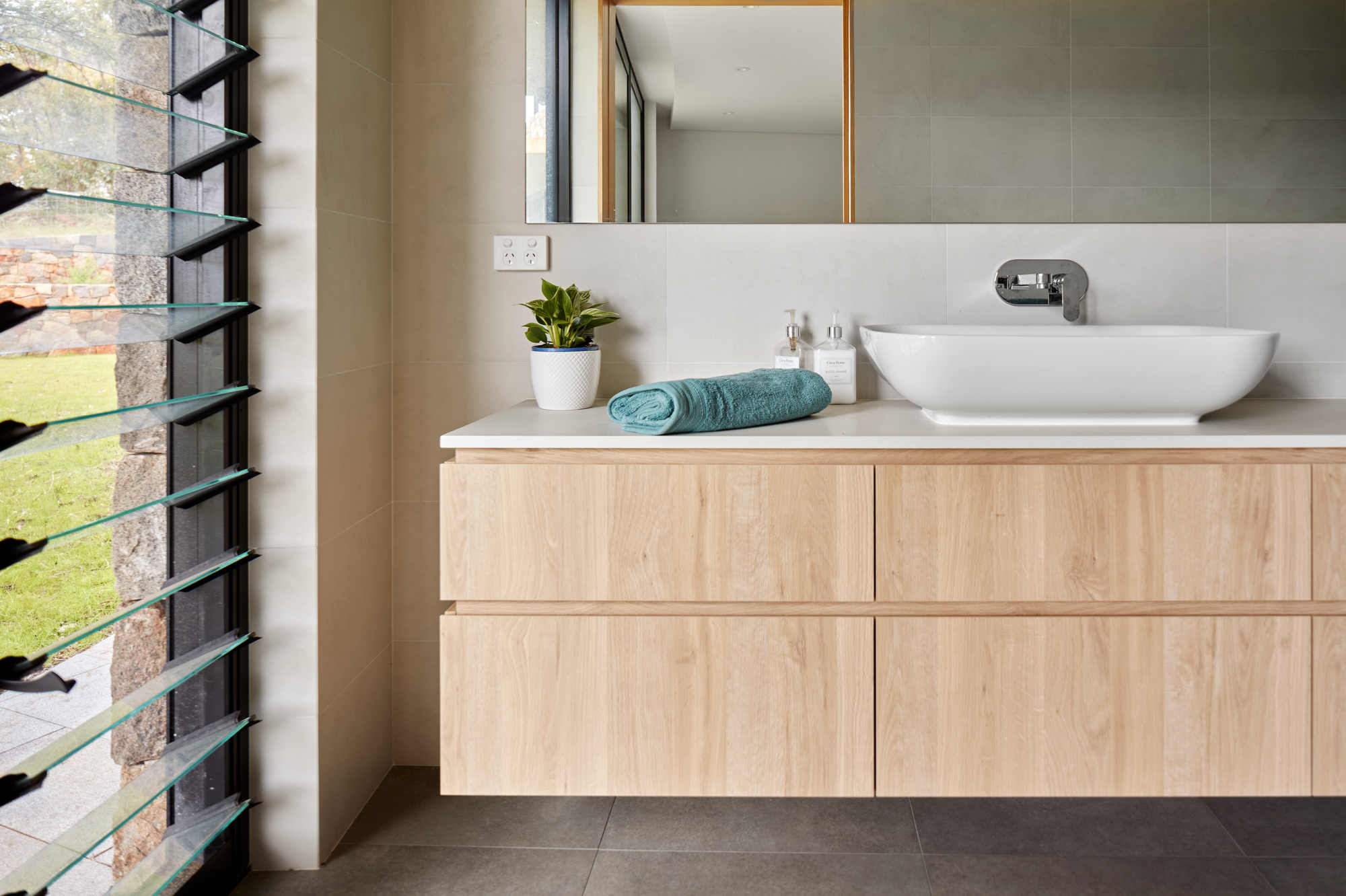
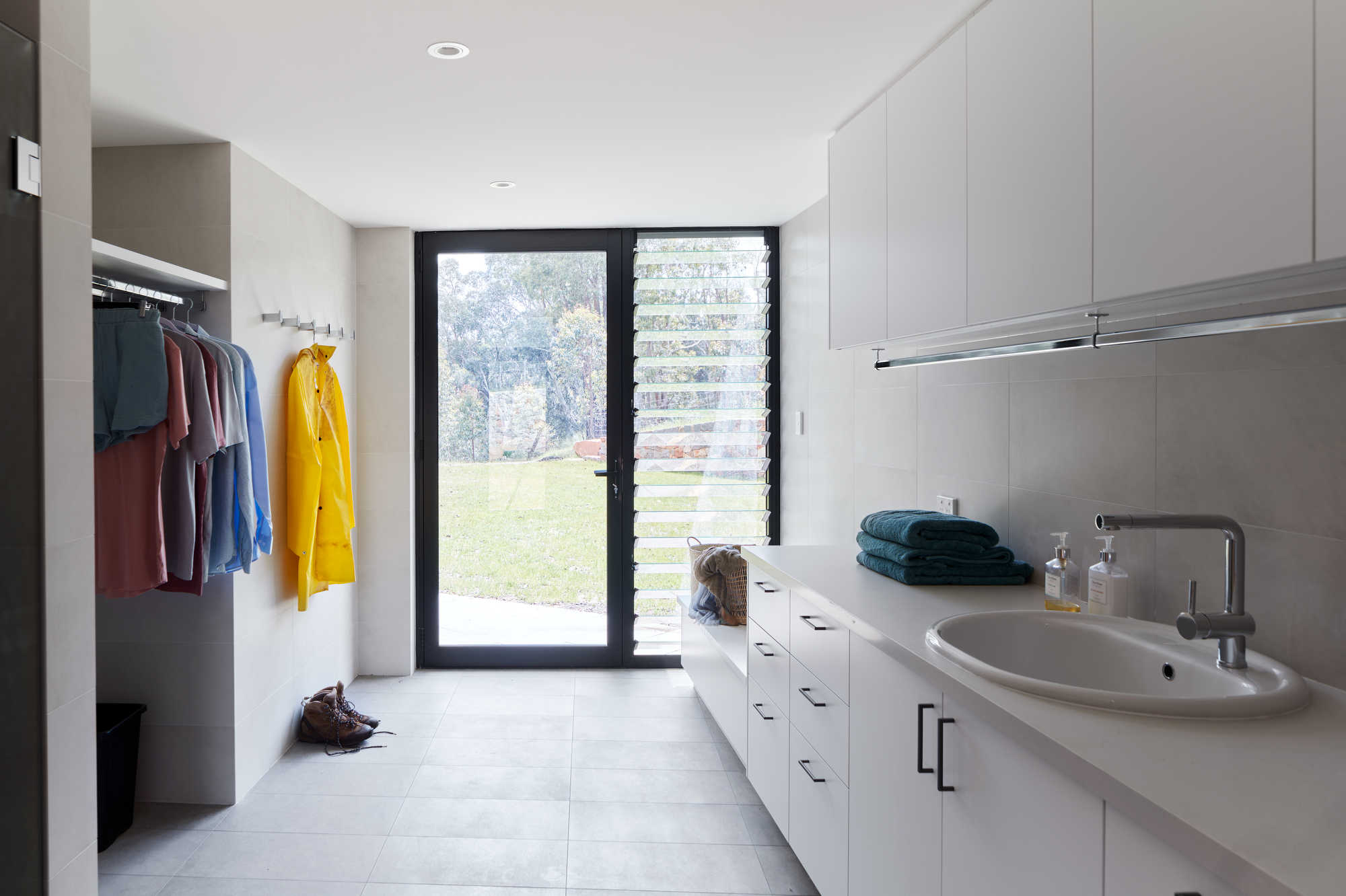
Internal finishes are deliberately low-key and low-maintenance, comprising porcelain tiles, hoop-pine plywood ceilings, laminate joinery, locally manufactured fixtures/fittings/appliances. The plywood ceiling to the butterfly roof curves up at both ends. Beneath the mezzanine acoustically treated substructure with battens, fabric and insulation reduce noise transfer, hide a/c. The external materiality is low-maintenance, bushfire-proof local stone collected by the family from the site. The laying technique was matched to the original cottage wall. Stonemasons worked for 15 months to lay the curving walls creating the fluid form.
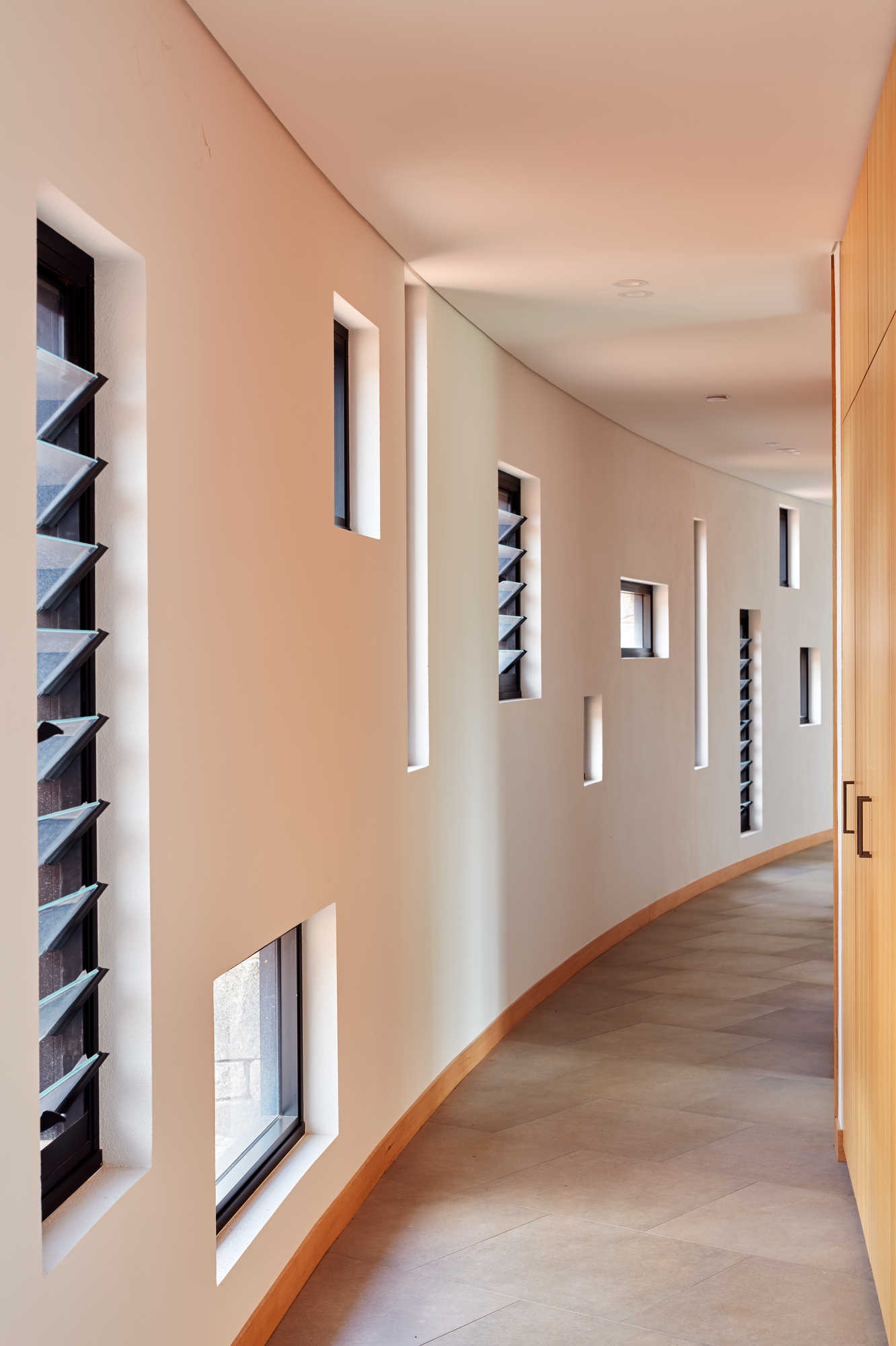
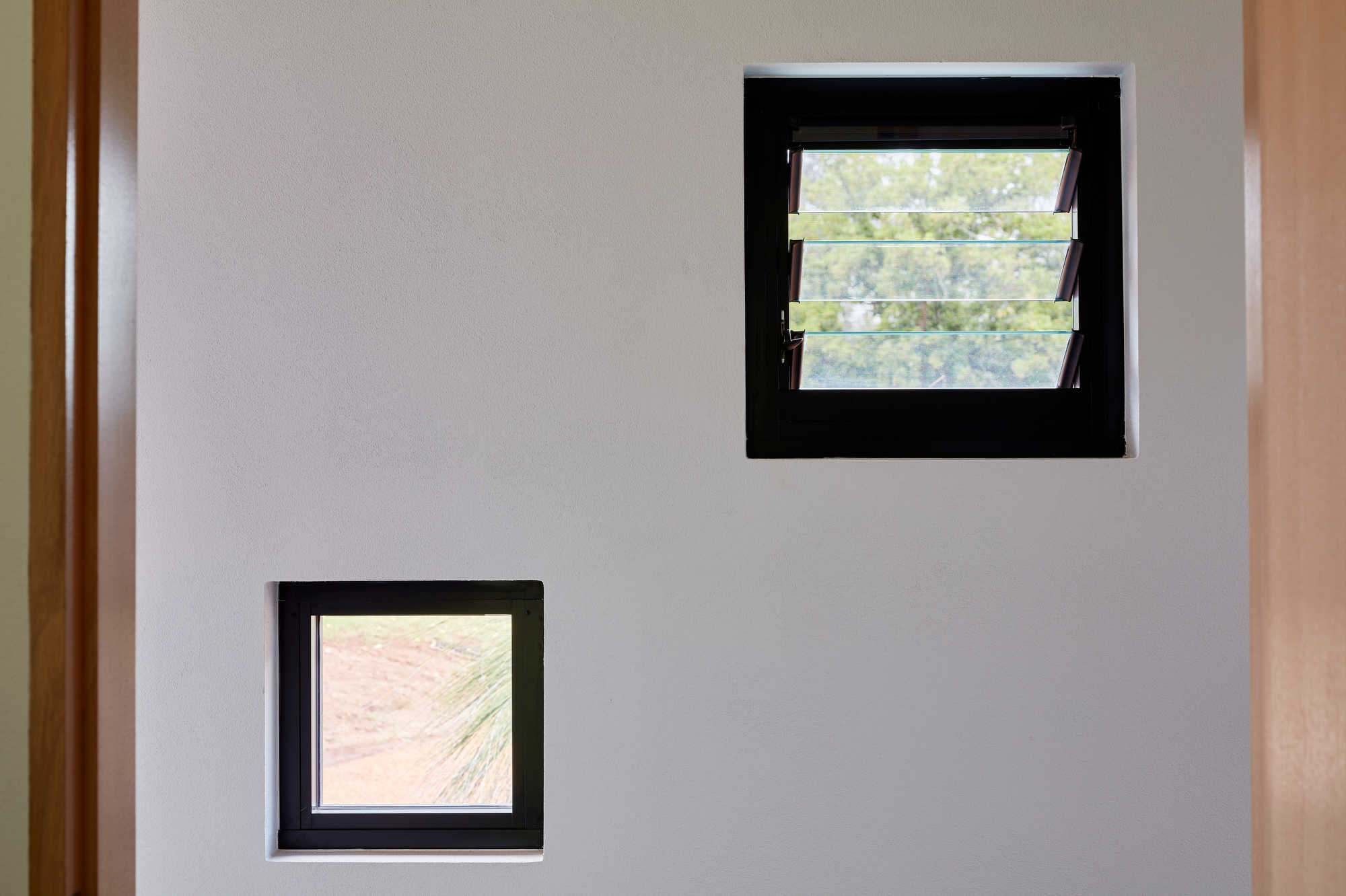
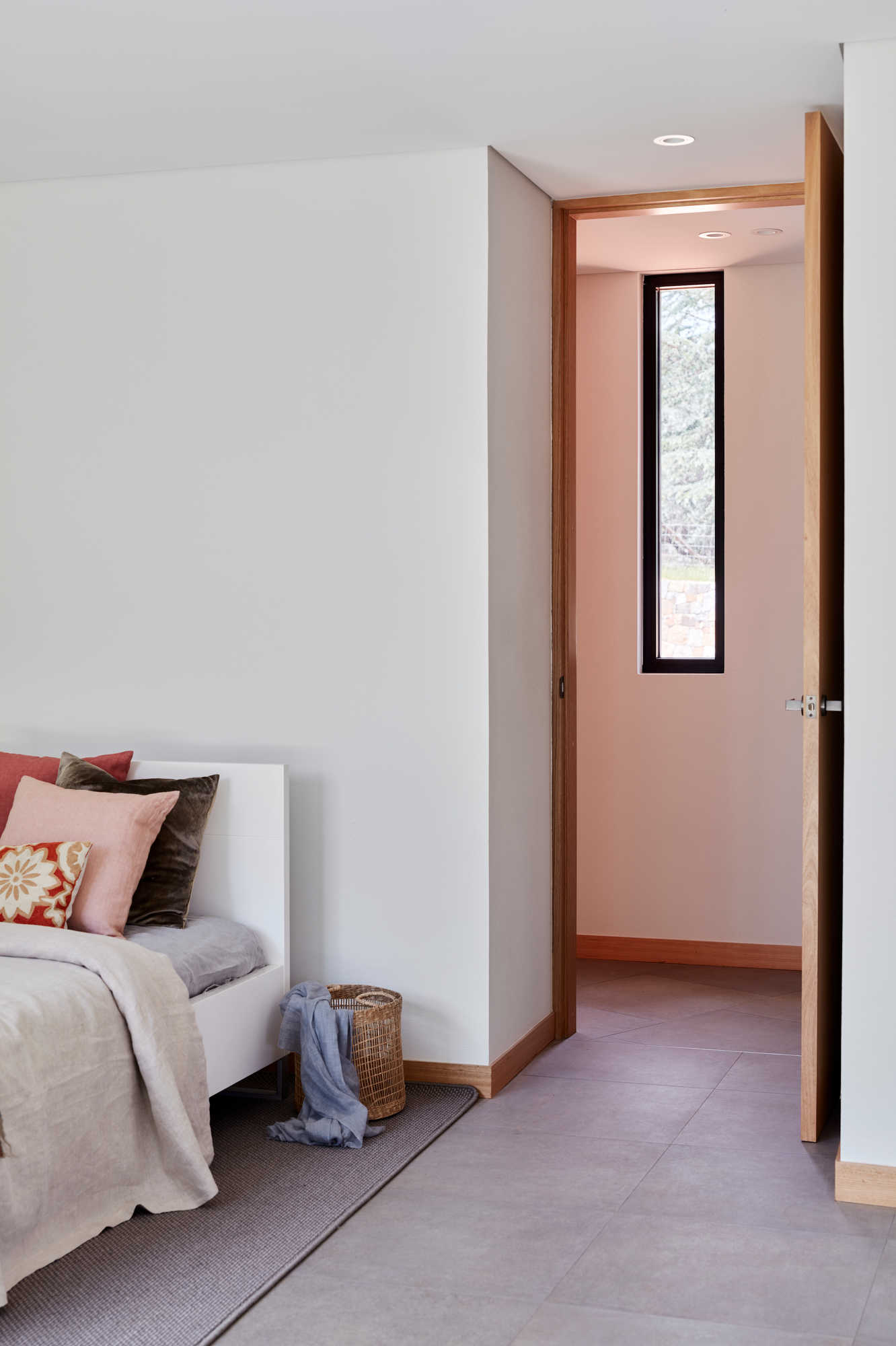
Along the curving circulation spine linking the accommodation and living areas strategically placed deep windows frame views of the landscape like small paintings or photos, providing cross breezes and protection from the afternoon sun. Passive and active sustainability measures and bushfire requirements were subtly incorporated. The entry gates, bridges, passing-lanes, and curving driveway/roundabout enable fire trucks to safely enter/exit. Passive-solar principles include north-facing orientation, thermal mass, crossflow breezes via high/low windows louvres and ceiling fans. A wood-fire and minimum air-conditioning is provided for comfort only. High-level windows are wired for external blinds. Limited grid power is augmented by 15Kw photovoltaics on nearby sheds, two existing 140kL water-tanks were refurbished and an ATU installed.
Our clients visit weekly, often staying for days, enjoying hosting overnight guests and extended family in the cottage. Stone House represents an excellent investment for our clients, given the complex constraints, particularly integrating bushfire requirements and reuse of the cottage. But most importantly it enhances and continues our clients’ long family-history on the site.
Our clients perspective I wanted our house to be in nature; as close as we could practically be to the bush. The design takes advantage of the hilly site: it comes out of the ground, with the curves and local stone adding to the sense that it belongs here. Being in the house is fantastic. As soon as I drive in the gate, I feel relaxed. It’s resort-like, not just a farmhouse. It’s very comfortable for just us, and to entertain family and friends. I especially enjoy sitting up on the deck in the afternoon, drink in hand, watching the sunset.
Stone House Photos | Rob Frith